Flies & Fly Tying
The Dry-Dropper Rig, Explained
A buoyant dry fly on top, a nymph hanging below. The most useful rig a beginner can learn — here is how to tie it.
A dry-dropper is a buoyant dry fly with a nymph tied to hang below it. The dry catches fish and simultaneously acts as your strike indicator for the nymph, which means you fish the surface and the subsurface at the same time with one cast.
For a beginner this solves the hardest problem in nymphing — not being able to tell when a trout has eaten — without buying anything new. It is not a compromise rig; experienced anglers fish it constantly.
The short list
| # | Pick | Best for | Score | Price |
|---|---|---|---|---|
| 1 | Orvis Essential Trout Fly SelectionPre-packaged assortmentBest Overall | Contains both the dries and the nymphs this rig needs | 7.8 | Check price on Amazon |
| 2 | RIO Powerflex TippetCo-polymer, PTFE coatedBest Value | The tippet spool the dropper is tied from | 8.2 | Check price on Amazon |
1. Best Overall
Orvis Essential Trout Fly Selection
The right first fly purchase if you do not have a local shop to ask — a curated set rather than a hundred random flies.
| Spec | Value |
|---|---|
| Type | Pre-packaged trout fly assortment |
| Packaging | Sized to slip into a wader pocket or sling pack |
| Related sets | Essential Trout Dries and Essential Trout Nymph assortments sold separately |
The hardest part of buying your first flies is that the question has no general answer: the right fly depends on your river, the month and what is hatching. Faced with that, most beginners buy a hundred-fly bulk assortment, and most of those flies never get fished.
A curated assortment is the better compromise. Orvis's Essential Trout Fly Selection is a pre-packaged set sized to live in a wader pocket, and Orvis also sells dries-only and nymph-only versions if you already know which style your water calls for.
The honest caveat, and we would rather say it than sell you flies: if there is a fly shop within driving distance, go in and ask. Local knowledge beats any national selection, and it costs you nothing.
What we like
- Removes the single most paralyzing decision a beginner faces, which is which flies to buy
- Covers dries and subsurface patterns rather than only one style
- Orvis hooks and tying quality are consistent, which matters because a bent hook point is invisible until you miss a fish
What you give up
- Generic across the country rather than matched to your local water
- Costs more per fly than buying a bulk assortment
| Criterion | Score / 10 |
|---|---|
| Pattern choice | 8 |
| Hook quality | 9 |
| Beginner value | 8 |
| Local relevance | 5 |
| Value | 7 |
| Overall | 7.8 |
2. Best Value
RIO Powerflex Tippet
The spool that makes a tapered leader last a season instead of an afternoon.
| Spec | Value |
|---|---|
| Material | Co-polymer |
| Coating | PTFE |
| Color | Light gray |
Tippet is plain level line on a spool, and its job is to be the sacrificial end of your leader. You tie a length of it to the thin end of your tapered leader, and when it gets short from fly changes you add another length instead of buying another leader.
RIO's Powerflex is a co-polymer with a PTFE coating in light gray. It is supple, which lets a small dry fly sit and drift naturally rather than being dragged by a stiff tether. Two spools — 5X and 4X — cover almost all trout fishing a beginner will do.
One thing worth knowing: nylon and co-polymer tippet ages. UV and heat weaken it, so a spool that has spent two summers on a dashboard should be thrown away rather than trusted on a good fish.
What we like
- Supple enough to let a small fly move naturally, which is most of what tippet does
- A single spool outlasts several tapered leaders, so it is the cheap half of the system
- The light gray is genuinely hard to see in moving water
What you give up
- Co-polymer floats more readily than fluorocarbon, which matters if you are fishing deep nymphs
- Degrades with UV and age — a spool that has lived on a dashboard for two summers is not trustworthy
| Criterion | Score / 10 |
|---|---|
| Suppleness | 9 |
| Knot strength | 8 |
| Visibility | 8 |
| Durability | 7 |
| Value | 9 |
| Overall | 8.2 |
How to tie it
- Rig normally: fly line to a tapered leader, finishing around 4X or 5X. See how to set up a fly rod if that sentence is not yet familiar.
- Tie your dry fly to the end of the leader with a clinch knot. Choose something buoyant and visible — a Stimulator, a hopper, a big Elk Hair Caddis. It has to float with a nymph hanging off it.
- Cut a length of tippet 18 to 36 inches long, one size finer than your leader tip (5X tippet off a 4X leader).
- Tie that tippet to the bend of the dry fly's hook with a clinch knot. This is the simplest connection and the one to learn first. (The alternative is tying it to the dry fly's hook eye, which hinges less and tangles more.)
- Tie your nymph to the free end. A beadhead is best — it needs enough weight to hang straight down.
- Grease the dry fly with floatant, and leave the nymph untreated. Treat the tippet too if you want the nymph to sit shallower.
How far apart?
| Water | Dropper length | Why |
|---|---|---|
| Shallow riffles, 1-2 ft | 18-24" | Any longer and the nymph drags bottom constantly |
| Typical pocket water, 2-3 ft | 24-30" | The default. Covers the lower half of the column |
| Deeper runs, 3-4 ft | 30-36" | About as long as a dry fly can suspend before it is pulled under |
| Deeper than 4 ft | Not this rig | Switch to an indicator rig — the dry cannot hold a nymph that deep |
Aim to have the nymph drifting in the bottom third of the water column. If you never tick bottom, go longer or heavier; if you snag constantly, go shorter or lighter.
Which flies to pair
| Dry (on top) | Nymph (below) | When |
|---|---|---|
| Stimulator 10-12 | Beadhead Pheasant Tail 16 | The all-purpose pairing. Start here |
| Foam hopper 10 | Hare's Ear 14 | Summer, grassy banks, bigger water |
| Elk Hair Caddis 14 | Zebra Midge 18 | Clear water, fussy fish, tailwaters |
| Royal Wulff 14 | Beadhead Pheasant Tail 16 | Small streams and high-country creeks |
All eight of those flies are on the best trout flies list, which is not a coincidence — the core selection was chosen partly because it rigs this way.
Fishing it, and setting the hook
Cast slightly upstream, let both flies drift at the speed of the current, and watch the dry fly. Set the hook on anything the dry fly does that the current did not ask it to do: a dip, a pause, a twitch sideways, a disappearance.
Set the hook with a firm lift of the rod, not a yank. A yank on 5X tippet breaks it and a yank on a dry-dropper usually puts both flies in the tree behind you.
Casting two flies needs a slower, wider loop than a single fly — open up the stroke and pause longer at the back. Tangles are usually a too-tight loop rather than bad luck.
Questions people actually ask
How far below the dry fly should the nymph be?
Usually 18 to 36 inches, aiming for the nymph to drift in the bottom third of the water column. Shorter in shallow riffles, longer in deeper runs. Past about four feet of water, switch to an indicator rig instead.
Do I tie the dropper to the hook bend or the eye?
The hook bend, with a clinch knot, is the easiest to tie and the easiest to adjust. Tying to the eye hinges less but tangles more and is fiddlier — the bend is the right place to start.
Why does my dry fly keep sinking on a dry-dropper?
The nymph is too heavy for the dry. Go bigger and more buoyant on top — a Stimulator or a foam hopper rather than a standard mayfly dry — or drop to a lighter nymph. Also apply floatant before the dry ever gets wet.
Is a dry-dropper better than an indicator?
For a beginner in water up to about four feet, yes. It needs nothing extra, it catches fish on the top fly as well, and it lands more gently. An indicator rig wins once you need real depth or heavy flies.
Why do my two flies keep tangling?
Almost always a casting loop that is too tight and too fast. Slow the stroke, open the loop, and pause longer on the back cast. Shortening the dropper also helps while you learn.
Where these figures come from
Read next
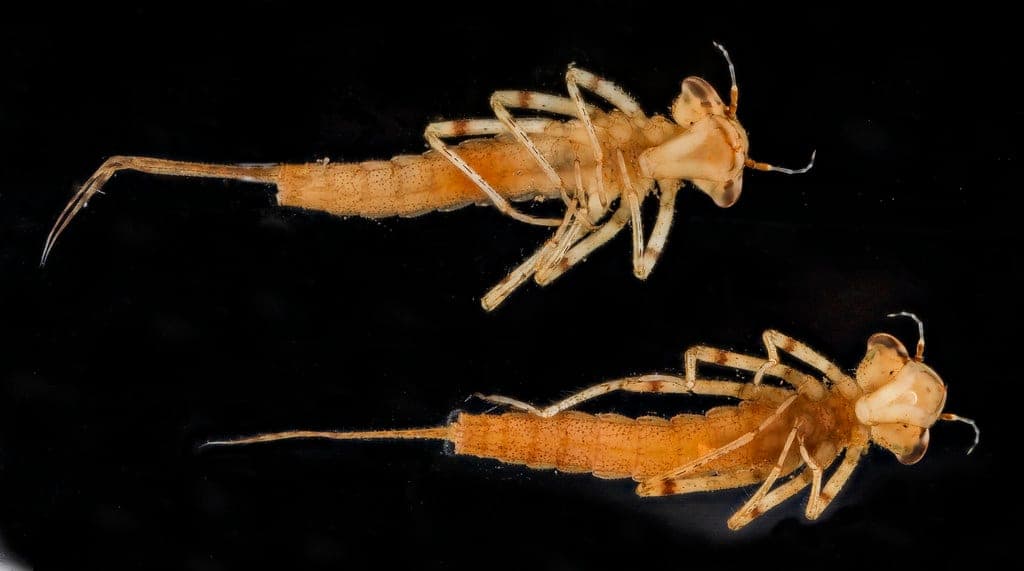
Best Nymphs
Best Nymphs for Trout
Four nymph patterns that catch trout almost anywhere, plus the nymph-only assortments worth owning.
Best Dry Flies
Best Dry Flies for Trout
The four dry-fly patterns that cover most rises, and the assortments that include them.
Fly Line, Leader & Tippet
How to Set Up a Fly Rod
Nine numbered steps from a bare rod to a fly on the end, including the guide everyone misses.
Fly Line, Leader & Tippet
Leader vs Tippet
A leader is tapered, tippet is level. Why you need both, and the habit that makes a leader last weeks.