
Best Net
Best Fly Fishing Nets
Nets ranked on the bag — the part that protects the fish — with hoop sizes and honest trade-offs.
Category
None of this catches a fish. A net protects the ones you release, and a pack stops you losing the things that do catch fish.
The short answer
A knotless hook-resistant bag, a 16-inch hoop and a short 9-inch handle — the right shape for standing in a river rather than reaching from a boat. The knotless bag is the single most important fish-welfare feature on any net.
This is the hub where it is easiest to spend money on things that do not help, so we will be blunt about the hierarchy. Two items here are genuinely non-optional and cost almost nothing: nippers and forceps. Nippers cut tippet cleanly, which you do dozens of times a day. Forceps get a hook out of a fish's jaw quickly, without squeezing the fish, and get a hook out of your own finger.
Everything else on this page is a comfort or a welfare improvement, in roughly this order of usefulness:
You can fish your first three trips with nippers, forceps, a leader packet, a tippet spool and a dozen flies in a jacket pocket. We would rather you did that and spent the difference on a license and a tank of gas.
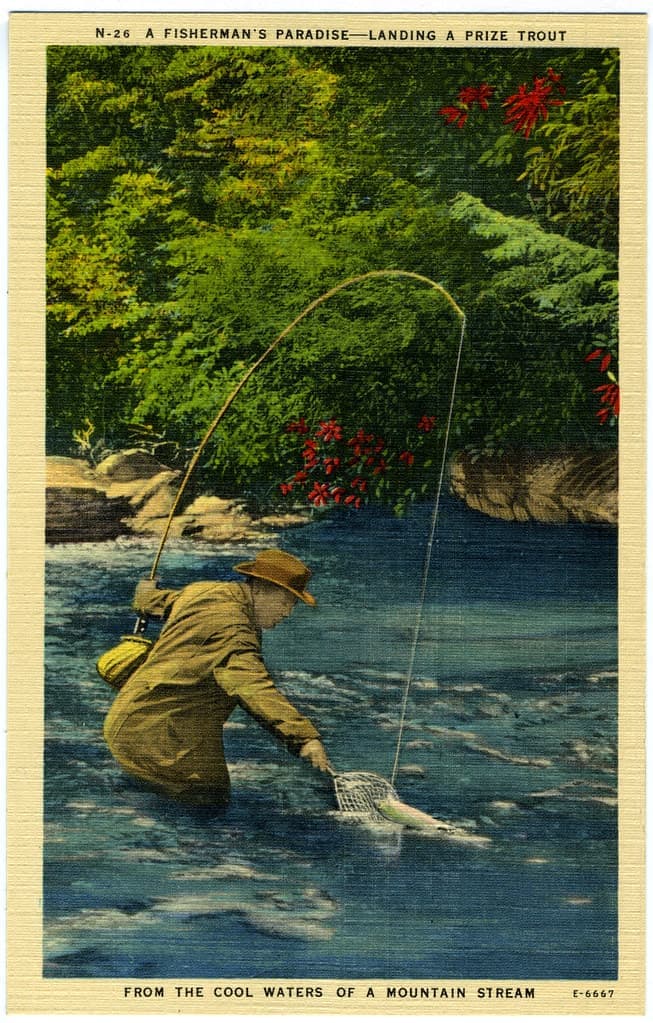
Best Net
Nets ranked on the bag — the part that protects the fish — with hoop sizes and honest trade-offs.
Best Pack
Chest packs and slings ranked on access and capacity, with the honest case for each style.
Best Vest
Vests ranked on pocket layout and heat, with weights and pocket counts — and when to buy a pack instead.
Best Tool Kit
Nippers, forceps and zinger kits compared — and the three tools that are genuinely worth buying properly.

Nets, Packs & Vests
Sling, chest or hip pack compared on capacity, access and wading depth, with a clear first-pack pick.

Nets, Packs & Vests
Rubber or nylon net mesh, compared on fish safety, hook tangles and cold-weather use. The answer is clear.

Nets, Packs & Vests
A sizing chart for net hoop, bag depth and handle length, matched to fish size and fishing style.
Nets, Packs & Vests
Six decisions that pick a net, in priority order — starting with the one that eliminates most of the market.

Nets, Packs & Vests
The essential day kit for fly fishing, the sensible extras, and the safety items that are not optional.
Nets, Packs & Vests
How to land, unhook and release a trout so it survives — the handling sequence beginners get wrong.
| Item | Realiztic band | Buy it when? |
|---|---|---|
| Nippers and forceps | Price of a takeaway | Immediately — these are not optional |
| Floatant | Price of a coffee | If you fish dry flies |
| A net | Tens to low hundreds | After a few trips |
| Chest pack | Low hundreds | Once a jacket pocket is not enough |
| Sling pack | Tens to low hundreds | If you also carry a jacket and food |
| Mesh vest | Tens to low hundreds | Hot weather, lots of fly boxes |
| Rod and reel case | Tens to low hundreds | If you fly, or your rod lives in a car |
A trout is covered in a slime coat that keeps infection out. Knotted nylon mesh strips it; dry hands and dry gravel strip it. A fish held in the current in a knotless rubber or soft-mesh bag can be unhooked and released in seconds with that layer intact.
So the specification that matters on a net is not the hoop size or the handle material. It is the bag: knotless, soft, hook-resistant and deep enough that the fish stays in it. Everything else is ergonomics.
Best fly fishing nets is the roundup, and how to choose a fly fishing net is the decision walkthrough if you want the reasoning before the picks.
Every carry option in fly fishing is a point on one line: the more accessible your tackle is, the less of it you can carry. That is the whole decision, and getting it right has more to do with how far you walk than with any feature list.
| Style | Access | Volume | Best for |
|---|---|---|---|
| Chest pack | Excellent — never comes off | Low (around 4 L) | Short walks, wading, minimal kit |
| Sling pack | Good — swings to the front | High (10 L and up) | A jacket, water and food as well as tackle |
| Hip pack | Good, but awkward in deep water | Medium | Wading shallow, walking a long way |
| Mesh vest | Excellent across 8 pockets | Low, spread out | Hot weather, several fly boxes |
| Jacket pocket | Fine | Very low | Your first few trips. Genuinely. |
Sling versus chest versus hip pack is the full comparison. The roundups: best fly fishing packs and best fly fishing vests.
Four items, and together they cost less than a dozen flies:
Best fly fishing tool kits covers buying these together, which is usually cheaper than separately, and what to carry on the water is the full day-pack list including the non-tackle items people forget.
Fly rods do not break while fishing. They break in car doors, screen doors, roof racks and under feet in the back of an estate. A rod tube costs a fraction of a rod and removes most of that risk, and a combined rod-and-reel case means the rod can live assembled between trips.
Here is the honest version, though: you almost certainly do not need to buy one. Every combo we recommend ships with a rod and reel case, and for a first season that case is genuinely fine. The standalone market splits into a single hard case at roughly the price of a decent reel, and multi-rod travel systems costing many times that — neither is a sensible early purchase. Buy one when you start flying with a rod, and not before. See best fly rod combos for beginners for what comes in the box.
For wading and trout, a hoop around 15 to 17 inches with a bag at least 9 inches deep, on a short handle of roughly 9 to 12 inches. That handles fish to about 20 inches, which covers nearly all trout fishing. Go to a mid-length net of 35 inches or more only if you fish from a boat, where you need reach rather than compactness.
Rubber, for two reasons. It is far gentler on a fish's protective slime coat than knotted nylon, and hooks do not bury themselves in it the way they do in mesh — which saves you minutes of picking a fly out of a net while a fish waits. Nylon is lighter and cheaper, and a knotless soft nylon bag is an acceptable second choice. Knotted nylon is the one to avoid.
For your first few trips, a jacket pocket. After that it depends on one thing: whether you also need to carry a jacket, water and food. If yes, a sling. If no, a chest pack gives better access to tippet and nippers and never comes off your body. A mesh vest is the coolest option in hot weather and spreads the weight best, but holds no bulky items.
Not for your first few trips, though you should own one before long. You can land a trout by hand in shallow water without hurting it, and doing so teaches you a lot about how a hooked fish behaves. A net becomes important once you are catching fish regularly, because it shortens the fight and lets you unhook and release the fish in the water rather than on gravel.
Over one shoulder with the bag resting on your back and the strap across your chest, so it swings round to your front when you need it and sits out of the way when you cast. Set the strap so the bag rides above your waist in the water. The pack should be loose enough to rotate freely and tight enough that it does not swing while you walk.
Nippers to cut tippet, six-inch forceps to unhook fish and crimp barbs, a zinger or retractor to clip the nippers to your pack, and floatant if you fish dry flies. Together those cost less than a dozen flies and you will use the first two constantly. Everything else sold as a fly fishing tool is optional for a first season.
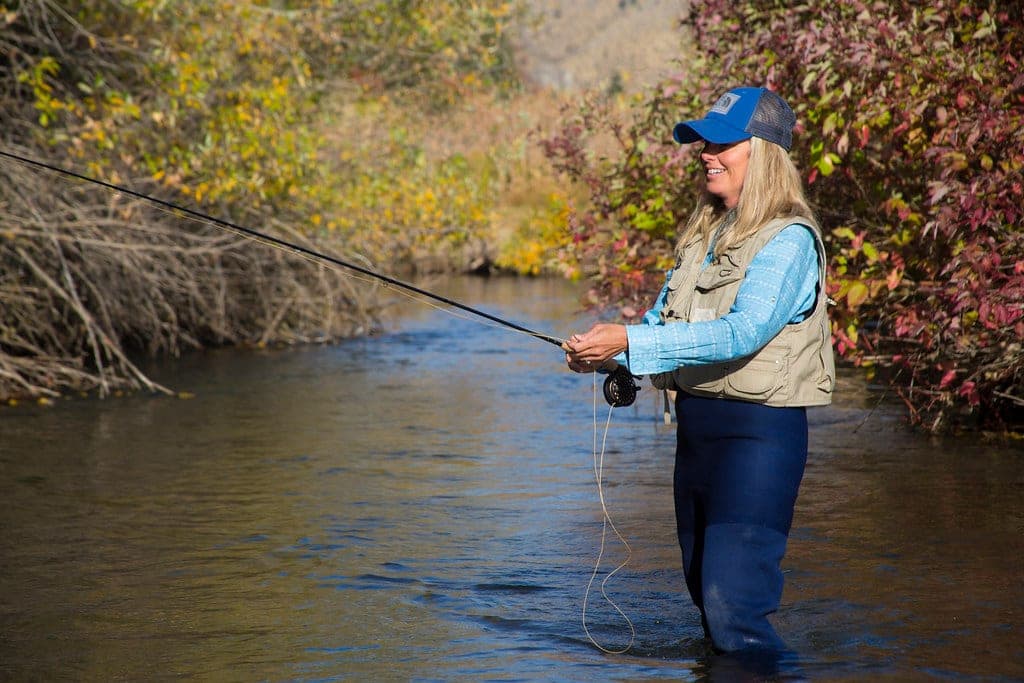
Category
The six things you need, in the order you need them — and the three things everyone tells you to buy that you can skip for now.
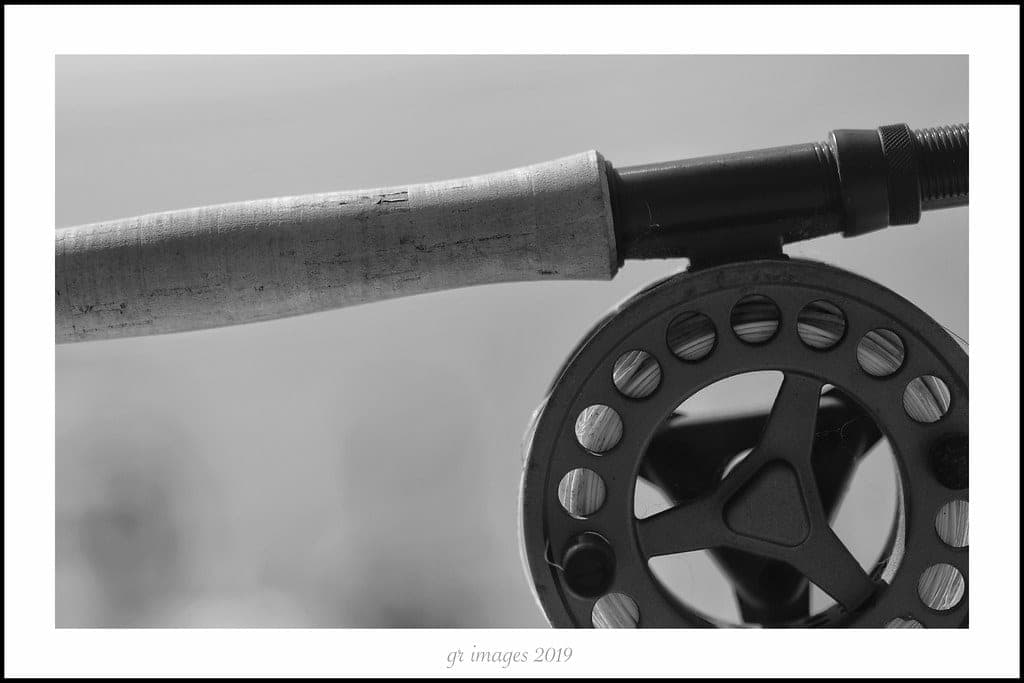
Category
Start with a 9-foot 5-weight. This is the hub that explains why, and which one to buy.

Category
On a trout rod the reel is mostly line storage. Here is the part of it that genuinely matters, and the part you are being sold.