Waders & Boots
Wader Sizing Guide
Height, weight and shoe size — all three, together. Waist alone is how people end up tripping in current.
Waders are sized on height, weight and shoe size together — not waist, and not a trouser size. Getting it wrong is not a comfort problem: too small in the body and you cannot lift a knee to climb a bank; too long and the fabric bunches at the crotch so you trip, and the bunched seam is the one that eventually fails.
The short list
| # | Pick | Best for | Score | Price |
|---|---|---|---|---|
| 1 | Simms Tributary Stockingfoot Waders3-layer upper · 4-layer lowerBest Overall | A published size range with bootie sizes stated per size code | 8.5 | Check price on Amazon |
| 2 | Orvis Clearwater Waders4-layer breathable nylonRunner-Up | Men's and women's patterns, four-layer fabric | 8.1 | Check price on Amazon |
| 3 | Simms Freestone Wading BootHardbite-compatible outsoleBest Value | The boots you size over the bootie | 8.1 | Check price on Amazon |
1. Best Overall
Simms Tributary Stockingfoot Waders
The wader we would buy first: breathable, four-layer where it counts, from the company most likely to still fix it in five years.
| Spec | Value |
|---|---|
| Fabric | Breathable waterproof polyester |
| Upper | 3-layer |
| Lower | 4-layer |
| Foot | Stockingfoot (wading boots sold separately) |
Waders are not waterproof trousers — they are a wearable barrier that has to survive being knelt on, dragged through brambles and pressed against gravel. That is why the Tributary uses a three-layer breathable polyester above the waist and a four-layer version below it. Nearly every leak a wader ever develops is below the waist.
Breathable is the right choice for almost everyone, because the alternative, neoprene, traps your own moisture and cooks you above about 60 degrees Fahrenheit. The trade is that breathable fabric insulates almost nothing: in cold water you wear fleece or merino underneath and the wader keeps it dry.
These are stockingfoot waders, meaning the leg ends in a neoprene sock and you wear separate wading boots over it. That is the right configuration for fly fishing — it gives you a real boot with ankle support and a sole you can choose — but it does mean the purchase is two purchases.
What we like
- Four-layer fabric below the waist is where waders actually fail, and this is where Simms spends the money
- Breathable, so you are not swimming in your own sweat on a warm day
- Simms repairs waders, and a repairable wader is a cheaper wader over five years
What you give up
- Stockingfoot, so you need wading boots as well — budget for both
- Breathable fabric gives you almost no insulation on its own
| Criterion | Score / 10 |
|---|---|
| Durability | 9 |
| Breathability | 8 |
| Comfort | 8 |
| Repairability | 9 |
| Value | 8 |
| Overall | 8.5 |
2. Runner-Up
Orvis Clearwater Waders
Four-layer fabric top to bottom with a real women's fit, at a small premium over the Tributary.
| Spec | Value |
|---|---|
| Fabric | Four-layer waterproof breathable nylon |
| Foot | Stockingfoot; a bootfoot version is also sold |
| Fits | Men's and women's |
The Clearwater's differentiator is simple: Orvis uses a four-layer waterproof breathable nylon for the whole garment rather than three layers above the waist. More layers means more abrasion resistance and more weight, and whether that is the right trade depends mostly on what you wade through.
The other thing worth flagging is fit. Orvis builds the Clearwater in a proper women's pattern, which is not universal in this price range and makes a large practical difference — a wader that is too long in the body is a wader you trip in.
There is also a bootfoot Clearwater, with the boot bonded on. That costs you sole choice and ankle support, and it saves you a second purchase. For a first wader on easy water it is a legitimate choice.
What we like
- Four-layer nylon throughout rather than only below the waist
- A genuine women's fit, not a men's wader in a smaller size
- A bootfoot version exists if you would rather buy one thing than two
What you give up
- Four layers everywhere is slightly warmer and slightly less breathable on a hot day
- Priced above the Tributary at most retailers we checked
| Criterion | Score / 10 |
|---|---|
| Durability | 9 |
| Breathability | 7 |
| Comfort | 8 |
| Repairability | 8 |
| Value | 7 |
| Overall | 8.1 |
3. Best Value
Simms Freestone Wading Boot
The boot to buy when you do not yet know your river: a solid rubber-soled walking boot that accepts studs the day you find out you need them.
| Spec | Value |
|---|---|
| Upper | Synthetic leather |
| Midsole | Dual-density EVA |
| Outsole | Hardbite-compatible (accepts studs) |
The single most useful feature on a first wading boot is the ability to add studs later. New anglers do not yet know whether their water is friendly gravel or polished, algae-covered bedrock, and the answer changes which sole you want. The Freestone's outsole is Hardbite-compatible, meaning you can screw in studs when you find out.
The rest is a properly built walking boot: a synthetic leather upper and a dual-density EVA midsole, so the boot actually walks rather than just standing in water. Synthetic uppers also drain and dry faster than leather, which matters because the main way invasive species move between rivers is in wet gear.
If your water turns out to be slick, add studs. If it turns out to be gravel, you have lost nothing. That optionality is the reason this is the pick.
What we like
- Stud-compatible, so you can add grip later once you know how slick your river is
- Dual-density EVA midsole is a real walking midsole, not a slab of rubber
- Synthetic leather upper dries faster than real leather and will not harbor invasive species the way felt can
What you give up
- Studs are an extra purchase
- Synthetic uppers are warm on a long dry walk in
| Criterion | Score / 10 |
|---|---|
| Traction | 8 |
| Support | 9 |
| Durability | 8 |
| Drainage | 8 |
| Value | 7 |
| Overall | 8.1 |
How wader size codes work
Wader sizing uses a letter code with modifiers, and the critical thing to understand is that each size code also carries a bootie size — the neoprene foot is built in, so your shoe size is part of the garment size.
| Size code | Bootie fits shoe size | What the modifier means |
|---|---|---|
| S | 7-8 | Standard small |
| SK | 7-8 | Small, alternative cut |
| M | 9-11 | Standard medium |
| MS | 9-11 | Medium short — shorter inseam |
| MK | 9-11 | Medium, alternative cut |
| ML | 9-11 | Medium long — longer inseam |
| L | 9-11 | Standard large |
| LS | 9-11 | Large short |
| LK | 9-11 | Large, alternative cut |
| LL | 9-11 | Large long |
| XL | 12-13 | Standard extra large |
| XLS | 9-11 | Extra large short |
| XXL | 12-13 | Standard double extra large |
The three measurements, and what each one controls
| Measurement | Controls | Too small | Too large |
|---|---|---|---|
| Height | Torso length and inseam | Cannot lift a knee; crotch pulls down | Fabric bunches at the crotch — you trip |
| Weight / chest | Girth through the body | Cannot wear layers underneath | Belt cannot seal; wader billows in current |
| Shoe size | The neoprene bootie | Numb feet; circulation restricted in cold | Bootie slips inside the boot; blisters |
The weight column is the one beginners forget. Breathable waders insulate nothing, so in cold water you are wearing fleece trousers and a base layer underneath — and the wader has to have room for them. Size for the clothing you will wear inside, not for bare legs.
How to check the fit before you commit
- Put them on over the layers you will actually wear, not over shorts.
- Bring a knee up to your chest. If you cannot, the body is too short. This is the single most important test, because it is exactly the movement you make climbing a bank.
- Squat down fully. Same test, harder. You will do this to land fish.
- Fit the wading belt and tighten it. If there is so much slack at the waist that the belt cinches into folds, the body is too large.
- Check the crotch. It should sit reasonably close. A low, bunched crotch is both a tripping hazard and a wear point.
- Stand on one leg and lift the other high. Checks inseam and shoulder strap length together.
- Walk in them. If the booties slide inside your socks, the shoe size is wrong.
If you are between sizes
- On height: size up. You can take in slack with a wading belt; you cannot add inseam. A short wader is the one you genuinely cannot work around.
- On girth: size up if you fish cold water and will wear fleece underneath; size down if you only fish in mild weather.
- On shoe size: do not compromise. A bootie that is too small restricts circulation and will make your feet numb in cold water. Look for a size code whose bootie range matches your shoe, even if that means a different body size and adjusting with a belt.
- Look for the short and long modifiers. MS, ML, LS, LL and XLS exist precisely so you can get the girth right and the inseam right separately.
Then size the boots
Wading boots go over the neoprene bootie plus a wading sock, which means one to two full sizes above your street shoe. Buying boots in your normal size is the most common wader-related purchase error there is.
Wading boot sizing guide covers that properly, and best wading boots has the picks. If you are buying for a woman, best waders for women covers which brands build a genuine women's pattern.
Questions people actually ask
How do I size waders?
On height, weight and shoe size together, using the manufacturer's current size chart — not on waist alone and not on a trouser size. Each wader size code also carries a bootie shoe-size range, because the neoprene foot is part of the garment. Size for the layers you will wear underneath, since breathable waders insulate nothing on their own.
What happens if waders are too big?
The fabric bunches at the crotch, which makes you trip in current and creates a wear point where the wader will eventually fail. The waist also ends up too loose for a wading belt to seal properly, which matters because the belt is what stops waders filling if you go in.
What happens if waders are too small?
You cannot lift a knee to your chest, which is exactly the movement you make climbing a bank, and the crotch pulls down uncomfortably. You also cannot wear insulating layers underneath — and since breathable waders insulate nothing on their own, that makes cold-water fishing genuinely unpleasant.
Should I size up or down in waders?
Up on height, every time — you can take up slack with a wading belt but you cannot add inseam. Up on girth too if you fish cold water and will wear fleece underneath. Do not compromise on shoe size: a bootie that is too small restricts circulation and makes your feet numb.
Do I size waders for the clothes I wear underneath?
Yes. Breathable waders have essentially no insulation, so in cool and cold water you will be wearing a base layer and fleece trousers inside them. Try waders on over those layers rather than over shorts, or you will buy a size that fits in July and is unwearable in October.
What do the MS, ML and LL wader sizes mean?
They are inseam and cut modifiers on the base size — short, long and alternative cuts. They exist so you can get girth and leg length right independently, which is the usual reason an off-the-peg wader does not fit. If a standard M is right around the body but too long in the leg, MS is the size to try.
Where these figures come from
Read next

Waders & Boots
Wading Boot Sizing Guide
Why wading boots go up one to two sizes, how much exactly, and how to check the fit.
Best Waders
Best Fly Fishing Waders
Waders ranked on the layer count below the waist, where they actually fail — plus when to skip them.
Best for Women
Best Waders for Women
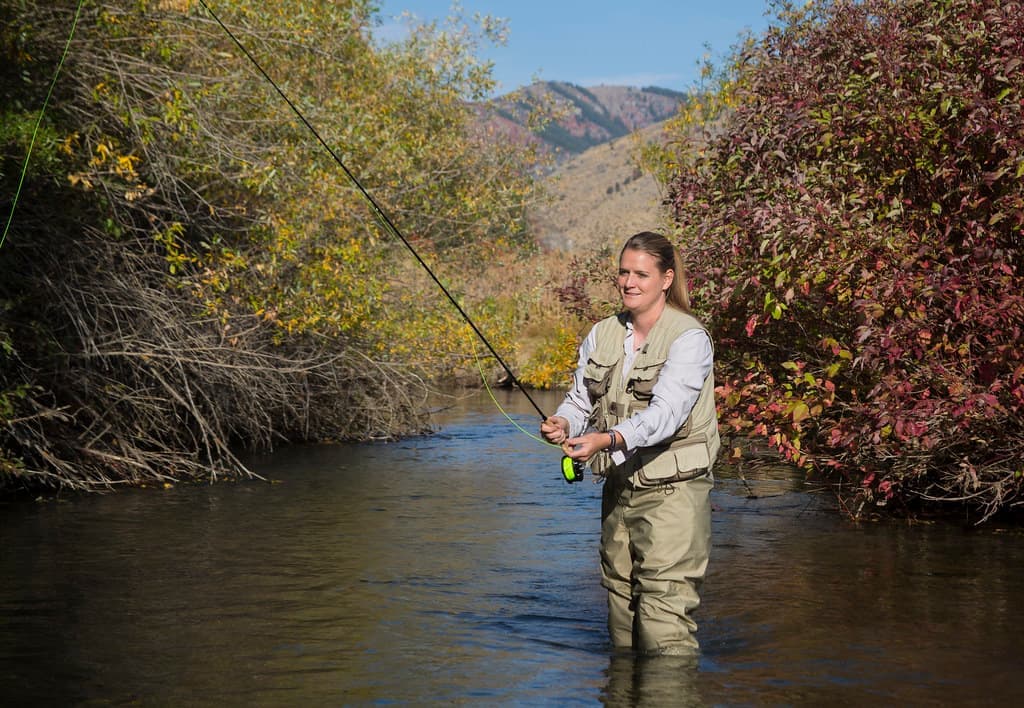
Which brands build a genuine women's pattern rather than a shorter men's wader, and why fit is a safety issue.

Waders & Boots
Breathable vs Neoprene Waders
Breathable insulates nothing and vents sweat; neoprene does the reverse. Compared by water temperature.
Best Wading Boots
Best Wading Boots
Wading boots ranked on traction and sole options — and why felt legality comes before the purchase.