Fly Rods & Combos
Best Fly Rod Combos for Kids
The mistake is buying a short rod. A child casts better with a longer, slower rod than with the stubby one marketed at them.
The best fly rod combo for most kids is the Orvis Encounter outfit in 8'6", 5-weight — a complete, rigged, grown-up outfit in the one length that suits a smaller angler. It is the pick below because it solves the real problem, which is not reach: it is that a child needs a rod that loads easily and forgives a late, hurried stroke. The Redington Crosswater does the same job for less, and the Wild Water Deluxe kit adds the flies and tools you would otherwise be buying separately on day one.
What to ignore: almost everything sold as a *kids' fly rod*. Shortening a fly rod to 6 feet does not make it easier to cast — it makes the line harder to lift off the water, shortens the stroke a child has to be precise within, and usually comes with a reel that cannot hold line properly. A child is better served by a slightly slow 8'6" rod sized for adults than by a 6-foot rod sized for a photograph.
The short list
| # | Pick | Best for | Score | Price |
|---|---|---|---|---|
| 1 | Orvis Encounter Fly Rod Outfit8'6" or 9'0" · 5 wt · 4-pcBest for Kids | The 8'6" 5-weight is the right first rod for ages 10 and up | 8.5 | Check price on Amazon |
| 2 | Redington Crosswater Fly Rod Outfit9'0" · 5 wt · 4-pcBest Value | A real branded line on the reel, at the lowest sensible price | 8.2 | Check price on Amazon |
| 3 | Wild Water Deluxe Fly Fishing Kit9'0" · 5/6 wt · 4-pcBest Starter Kit | Flies, nippers and forceps already in the box | 7.9 | Check price on Amazon |
| 4 | Maxcatch Extreme Fly Fishing Combo Kit9'0" · 5 wt · 4-pcBest Under $150 | The one to buy if the interest might not last | 7.2 | Check price on Amazon |
1. Best for Kids
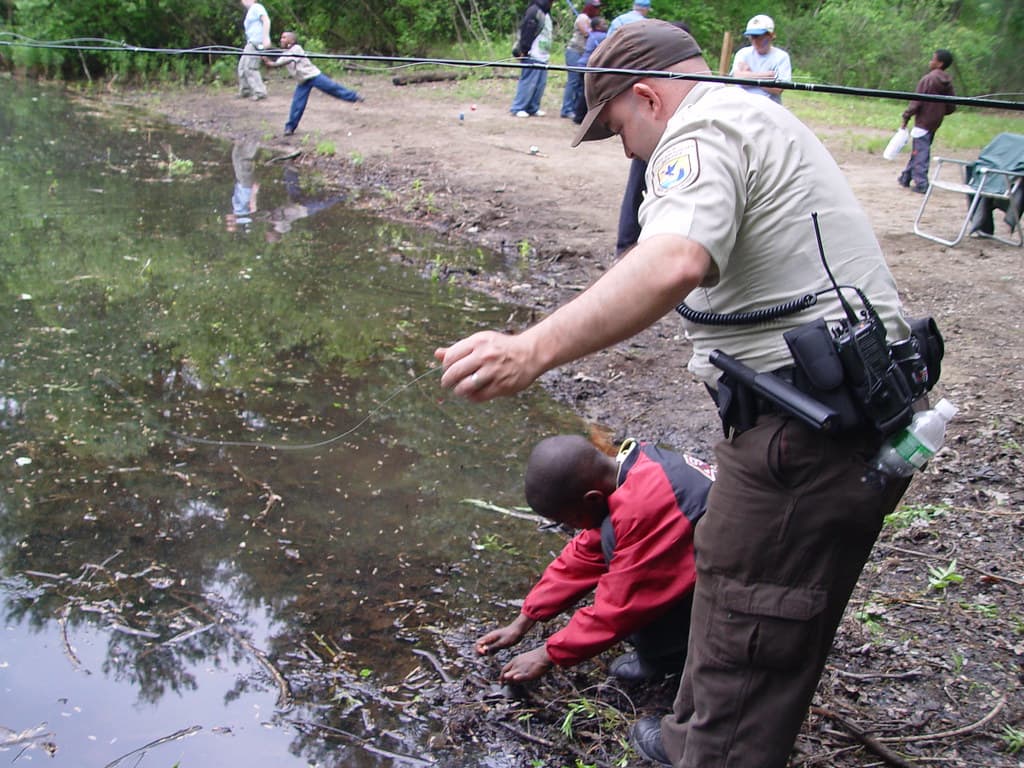
Orvis Encounter Fly Rod Outfit
The cheapest Orvis outfit that still arrives genuinely ready to fish — and the moderate action makes it easier to learn on than the Clearwater, not harder.
| Spec | Value |
|---|---|
| Rod | 8'6" and 9'0" in 5 wt; 9'0" in 6 wt and 8 wt |
| Pieces | 4-piece graphite |
| Action | Moderate (Orvis classification) |
| Reel | Encounter large arbor, size II on the 5 and 6 wt |
| Line | Scientific Anglers weight-forward floating, plus backing |
| Leader | 4X tapered leader on the 5 wt |
| Case | Rod and reel case included |
| Warranty | 5-year rod guarantee; lifetime defect guarantee on the reel |
The Encounter is where Orvis puts its entry outfit, and the interesting thing is that it is not simply a worse Clearwater. Orvis classifies the rod's action as moderate, one step softer than the Clearwater, and a softer rod is genuinely easier to learn to cast: it bends more under less line, so you can feel the rod load. Beginners who cannot feel a rod load tend to compensate by throwing harder, which is the single most common reason a new caster's loop falls apart.
The 8'6" 5-weight is worth noticing. Most beginner outfits exist only at 9 feet, which is right for open rivers and wrong for a creek with alders over it. If your water is small, the shorter Encounter is a better rod than the 9-foot Clearwater, at a lower price.
The compromise is the warranty and the reel. Five years on the rod instead of twenty-five, and an Encounter reel rather than the sealed-drag Clearwater II. Neither matters much for trout — you are not going to put a 5-weight reel's drag under real load very often — but it is the honest difference between the two.
What we like
- Moderate action is the most forgiving thing you can hand a beginner
- An 8'6" option exists, which is the right length for brushy small streams
- Scientific Anglers line out of the box rather than an unbranded house line
- Same ready-to-fish completeness as the Clearwater, for less
What you give up
- 5-year rod guarantee rather than the Clearwater's 25-year
- Reel is a step down in drag and finish from the Clearwater II
| Criterion | Score / 10 |
|---|---|
| Castability | 9 |
| Ready to fish | 9 |
| Build quality | 7 |
| Warranty | 7 |
| Value | 9 |
| Overall | 8.5 |
2. Best Value
Redington Crosswater Fly Rod Outfit
The best line-for-the-money in a starter outfit: a RIO Mainstream line on a competent 9-foot 5-weight, with the warranty as the obvious compromise.
| Spec | Value |
|---|---|
| Rod | 9'0", 5 wt, 4-piece graphite |
| Action | Medium-fast |
| Reel | Crosswater, carbon disc drag |
| Line | RIO Mainstream WF5F |
| Reel seat | Anodized aluminum |
| Handle | Cork |
| Assembly aid | Alignment dots on the blank |
| Case | Zippered travel case |
| Warranty | 1 year, limited |
| Weights available | 4-9 wt freshwater |
On a beginner outfit the fly line matters more than the rod, and almost nobody tells beginners that. The line is what you are actually casting — the rod only transfers energy into it. A cheap, stiff, poorly tapered line will make a good rod feel terrible, and most sub-$150 kits save money exactly there. Redington does not: the Crosswater ships with RIO Mainstream, a real production trout line.
The rod is a medium-fast 9-foot 5-weight with an anodized aluminum reel seat, a cork handle and alignment dots on the blank so the four sections line up without squinting. Medium-fast is slightly less forgiving than the Encounter's moderate action — you will feel the loop break down if you rush the stroke — but it is far from a stiff rod, and it has more reach when you need to pick line up off the water.
The reel has a carbon disc drag and does its job for trout. The honest limitation of the whole package is the one-year warranty. If you are the sort of person who closes a car door on a rod tip, factor that in.
What we like
- RIO Mainstream line is a genuinely good line, not a filler line — this is the single biggest reason to pick this kit over a cheaper one
- Alignment dots make assembling a 4-piece rod obvious instead of a guessing game
- Anodized aluminum reel seat rather than plastic at this price
- Widely stocked, so it is easy to actually buy
What you give up
- 1-year warranty is the shortest of any pick here
- Medium-fast action asks slightly more of your casting timing than the Encounter's moderate action
- No leader included — budget for a 9ft 4X or 5X tapered leader
| Criterion | Score / 10 |
|---|---|
| Castability | 8 |
| Ready to fish | 8 |
| Build quality | 7 |
| Warranty | 4 |
| Value | 10 |
| Overall | 8.2 |
3. Best Starter Kit
Wild Water Deluxe Fly Fishing Kit
The most complete box in the category, and the right answer when the real question is whether you are going to enjoy this at all.
| Spec | Value |
|---|---|
| Rod | 9'0", 5/6 wt, 4-piece |
| Action | Medium-fast |
| Reel seat | Machined aluminum, double lock rings, laser-etched butt cap |
| Handle | 7" western-style cork with compressed cork accent rings |
| Stripping guide | Stainless steel with silicon carbide ring |
| Reel | Die-cast aluminum, 85 mm spool, adjustable disc drag, pre-spooled |
| Case | 32" hard tube with reel pouch and zippered side pouch |
| Rod bag | 4-section cloth bag with ties |
| Fly box | Waterproof floating, 5.25" x 3.5" x 1.25", holds up to 372 flies |
| Tools | Two retractors, nipper with nail-knot tool, 6" stainless forceps |
| Flies | Included |
Most starter kits are a rod, a reel and a line. The Wild Water Deluxe is a rod, a reel, a line, flies, a 372-fly waterproof floating fly box, two retractors, a nipper with a nail-knot tool, six-inch forceps, a cloth rod bag and a 32-inch hard tube with a reel pouch. If you own nothing, that is the difference between fishing on Saturday and realizing on Saturday that you cannot cut tippet.
The rod is a 9-foot 5/6-weight, 4-piece, medium-fast, with a machined aluminum reel seat, double lock rings, a 7-inch western cork handle and a stainless stripping guide with a silicon carbide ring. That is a better-specified reel seat and stripping guide than you have any right to expect at this price. The reel is die-cast aluminum with an 85 mm spool and an adjustable disc drag, and it arrives pre-spooled.
The 5/6 designation is the honest weak point. A rod built to do both is slightly over-powered for a 5-weight line and slightly under-powered for a 6-weight. It casts fine. It just is not a rod you will keep once you know which one you actually wanted.
What we like
- It is genuinely everything: rod, reel, line, flies, fly box, nippers, forceps, retractors and a hard case
- The nipper has a nail-knot tool built in, which is the knot beginners struggle with most
- A 32" hard tube is better protection than the soft sleeves most kits ship with
- The cheapest honest route from nothing to fishing
What you give up
- Labeled 5/6 weight, which means it is a compromise between the two rather than optimized for either
- House-brand fly line rather than a RIO or Scientific Anglers line
- The included flies are a starting point, not a curated selection for your water
| Criterion | Score / 10 |
|---|---|
| Castability | 7 |
| Ready to fish | 10 |
| Build quality | 7 |
| Warranty | 5 |
| Value | 10 |
| Overall | 7.9 |
4. Best Under $150
Maxcatch Extreme Fly Fishing Combo Kit
The cheapest way to own an aluminum-reel outfit, with a fast action that works against the person most likely to buy it.
| Spec | Value |
|---|---|
| Rod | 9'0", 5 wt, 4-piece |
| Action | Fast |
| Blank | IM7 24T plus 30T carbon fiber |
| Reel | Large arbor aluminum, pre-loaded with line, backing and leader |
| Flies | 12 hand-tied flies in a waterproof box |
| Also included | Neoprene reel cover, retractor, line nipper, cap, travel case |
| Weights available | 3-10 wt |
The Maxcatch Extreme exists to be the lowest number on the page, and it does that without the usual plastic reel: you get a large-arbor aluminum reel, pre-loaded with line, backing and a leader, plus twelve hand-tied flies in a waterproof box, a neoprene reel cover, a retractor, a nipper, a cap and a travel case. For a first outfit, the completeness is real.
The rod is a 9-foot 5-weight, 4-piece, built on IM7 24T plus 30T carbon, and Maxcatch describes the action as fast. We would steer a self-taught beginner away from a fast action on principle. A fast rod needs a crisp stop and a well-timed pause; a slower rod tells you when it is loaded by bending. If you are learning from videos on a lawn, you want the rod that talks back.
Where it does make sense: as a second rod, a travel rod you would not cry over, or a first rod for someone with casting experience in another discipline who already understands loading a blank.
What we like
- Aluminum large-arbor reel, not a plastic one, at the bottom of the price range
- Arrives with line, backing AND leader already on the reel
- Twelve flies and a waterproof box included
What you give up
- Fast action is the wrong action for learning — it punishes a rushed casting stroke
- Heavier in the hand than the Echo Base or Orvis rods
- House-brand line; expect to replace it before you replace the rod
| Criterion | Score / 10 |
|---|---|
| Castability | 6 |
| Ready to fish | 9 |
| Build quality | 6 |
| Warranty | 5 |
| Value | 9 |
| Overall | 7.2 |
What length and weight for what age
There is no governing body on this and anyone who quotes you an exact chart is guessing. What follows is the pattern that holds up on the water: length comes down a little with the angler, weight does not come down at all, and the limiting factor is almost always arm fatigue rather than height.
| Age | Length to look for | Line weight | Why |
|---|---|---|---|
| 6-9 | 7'6" to 8'0" | 4-5 wt | Short enough to hold up, long enough to lift line. Expect a parent to do most of the casting |
| 10-13 | 8'6" | 5 wt | The sweet spot. A real rod, a real line, a stroke that works at 20 feet |
| 14+ | 9'0" | 5 wt | The standard adult trout rod. Buy this and it is still the right rod in ten years |
| Any age, stillwater or wind | 9'0" | 5-6 wt | Length and mass beat finesse when there is a breeze |
The weight column is the one people get wrong in the other direction. A 3-weight is not a child's rod — it is a specialist's rod, and it needs a better caster to make it work, not a worse one. A 5-weight carries enough mass for a short, sloppy stroke to still turn over a leader, which is exactly what a beginner of any age produces. Our fly rod weight explainer covers why that is, and the fly rod length guide covers the trade you make at each length.
Why kid-branded rods usually cast worse
A fly rod casts by bending under the weight of the line. That is the whole mechanism, and it is why fly casting feels so unlike spin casting. Three things happen when a rod is cut down to look child-sized:
- Less rod to bend. A 6-foot blank needs more line speed to load than an 8'6" blank does. The short rod is physically harder to cast well, not easier.
- Less leverage to lift line. Picking 25 feet of line off the water is a lever problem. Shorten the lever and the pickup becomes a drag.
- The reel stops being a reel. Kid combos are where you find reels with no drag, a spool too small for backing, and a line that is not actually the weight printed on the box. Does fly reel size matter? explains what the spool is for.
There is one genuine exception, and it is a short, soft fiberglass rod around 7 feet in a 3 or 4-weight. Glass loads at very low line speed, which does suit a small child casting 15 feet in a pond. None of the picks below is a glass rod, so we are not going to pretend otherwise — we cover the trade-off in fiberglass vs graphite.
How we chose these four
Four criteria, in this order. Castability by a weak stroke — is the action moderate rather than fast. Available in a sensible length — does an 8'6" exist, or is 9'0" the only option. Arrives fishable — line, backing and leader already on the reel, because the first hour should not be a rigging lesson. Replaceable without pain — a rod a child will stand on, so the warranty and the price both matter.
Specifications come from manufacturer and specialist-retailer listings, cited under Sources. We have not put these rods in a child's hands and do not claim to have; How We Choose sets out exactly what our scores are and are not.
What else to buy, and what to leave
The combo is most of the purchase. These are the few things worth adding, and the longer list of things that can wait.
| Item | Verdict | Why |
|---|---|---|
| Barbless or pinched-barb flies | Buy now | A barb in a thumb ends the day. Pinch every barb flat with forceps |
| Polarized sunglasses | Buy now | Eye protection first, fish-spotting second. Non-negotiable with a child casting |
| A rubber-mesh net | Buy now | Children want to hold the fish. A net keeps the fish alive while they do |
| Nippers and forceps | Buy now | Included with two picks below. Otherwise about the cheapest useful thing you can add |
| Waders | Buy later | Kids grow out of waders in a season. Shorts and old sneakers in summer water |
| A spare spool or extra line | Buy later | Nothing a beginner does requires a line change |
| A second rod | Do not buy | Two rods and one interested child is one rod too many |
Our first day on the water checklist is written for exactly this trip, and the gear checklist has the full list in buy order. If you are buying as a present rather than as a parent, fly fishing gifts under $50 is the better page — and the Orvis *Kids' Guide to Beginning Fly Fishing* in our books roundup is the one book written at a child's reading level.
Teaching the cast without ruining the day
- Start on grass, with no reel and no fly. Twenty feet of line, a short stroke, nothing to hook.
- Teach the stop, not the swing. The rod stops high on the back cast and the line straightens behind — that pause is the entire skill.
- Strip in to about 20 feet of line before trying again. Almost every child's tangle starts with too much line out.
- Move to water with a single dry fly and a pinched barb. Bluegill and small trout will eat it; nothing else needs to.
- Stop while it is still fun. Forty minutes of casting and a swim beats three hours of frustration.
One rigging decision makes a real difference on the day: use a short, stout leader — about 7'6" in 3X or 4X rather than a 9-foot 5X. It turns over at low line speed and it survives the tangles. Leader vs tippet explains the numbers, and how to set up a fly rod walks through the knots.
Questions people actually ask
What size fly rod should a child use?
An 8'6" 5-weight for most children aged roughly 10 and up, and a 7'6" to 8'0" rod in a 4 or 5-weight for younger ones. Resist going shorter than that: a very short fly rod is harder to cast, not easier, because there is less blank to bend under the line and less leverage to lift line off the water.
Is a 3-weight a good rod for a kid?
Usually not. A 3-weight carries very little line mass, so it demands a tighter, better-timed stroke than a beginner produces. A 5-weight line has enough mass to turn a leader over even when the cast is late and sloppy, which is the single most useful property a child's rod can have.
Should I buy a combo or separate pieces for a child?
A combo, almost without exception. A rigged outfit arrives with line, backing and a leader already on the reel, matched to the rod, so the first hour on the water is fishing rather than rigging. We make the general case in combo or buying the pieces separately, and it is even stronger when the angler is eight.
How old does a kid need to be to fly fish?
Children can hold a rod and catch fish from around six, usually with a parent making the cast and the child doing the retrieve and the landing. Independent casting tends to arrive somewhere around nine or ten, when there is enough arm to hold an 8-foot rod up for an hour.
Do kids need waders?
Not in summer. Shorts and a pair of old sneakers with a closed toe handle warm shallow water, and children outgrow waders in a season. In cold water a child should be on the bank rather than in it, which is a safety answer rather than a gear one.
What is the cheapest way to get a child started in fly fishing?
A sub-$150 complete combo, a dozen barbless flies, a pair of polarized sunglasses and a pond with bluegill in it. The combo is the only part where spending more buys a meaningfully better experience, and even there the jump from $100 to $200 matters more than the jump from $200 to $400.
Where these figures come from
- Orvis Encounter Fly Rod Outfit — lengths, weights, reel and line supplied
- Redington Crosswater Fly Rod Outfit — rod, reel and RIO Mainstream line
- Wild Water Deluxe Fly Fishing Kit — rod, reel, flies and tools included
- Maxcatch Extreme Combo Kit — weights available, reel and included extras
- Orvis Kids' Guide to Beginning Fly Fishing — reading level and contents
Read next
Fly Rods & Combos
Fly Rod Length Guide
Why 9 feet is the default, when shorter is genuinely better, and what length actually buys you.

Best Under $100
Best Fly Fishing Combos Under $100
What around-$100 actually buys, what it compromises, and when that is the right trade.

Start Here
Your First Day on the Water: A Checklist
Nine ordered steps from the night before to the first cast, plus the four mistakes almost every beginner makes.
Best Small-Stream Rods
Best Fly Rods for Small Streams
Why 8'6" beats both 9'0" and 7'0" on brushy creeks, where a 3-weight genuinely helps and where it does not, and four picks.