Fly Line, Leader & Tippet
Floating vs Sinking Fly Line
Buy a floating line. It fishes the surface and the bottom, and you get depth from the flies rather than the line.
Buy a floating line, and only a floating line, for your first season. A floating line fishes dry flies on the surface, nymphs below an indicator, and small streamers. You get depth from weighted flies and a longer leader, not from a sinking line.
The short list
| # | Pick | Best for | Score | Price |
|---|---|---|---|---|
| 1 | Scientific Anglers Frequency TroutWF5F · 85 ft · 140 grBest Overall | The floating line that does almost everything | 8.7 | Check price on Amazon |
| 2 | RIO Mainstream TroutWeight-forward floatingBest Value | The budget floating line | 7.8 | Check price on Amazon |
| 3 | Orvis Essential Trout Nymph AssortmentNymphs onlyBest Starter Kit | Weighted flies — how you get depth without a sinking line | 7.8 | Check price on Amazon |

1. Best Overall
Scientific Anglers Frequency Trout
If one component on a cheap combo is worth replacing first, it is the line, and this is the line we would replace it with.
| Spec | Value |
|---|---|
| Taper | Infinity-style belly, quarter-size heavy |
| Head length (WF-5-F) | 34.0 ft |
| Total length (WF-5-F) | 85.0 ft |
| Head weight (WF-5-F) | 140 gr |
| Core | Braided multifilament |
| Coating | AST slickness treatment |
| Loops | Welded |
A fly rod does not cast a fly. It casts a line, and the fly goes along for the ride. That one fact is why a good line on a cheap rod outperforms a cheap line on a good rod, and almost nobody explains it to beginners.
The Frequency Trout is built on an Infinity-style belly taper with slightly longer front and rear tapers and a quarter-size-heavy profile. In plain terms: there is a little more mass than the nominal weight, which loads a rod with less line out of the tip. If you are new and your loop is collapsing because you cannot feel the rod bend, that extra quarter size is the most direct fix available.
The WF-5-F has a 34-foot head, 85 feet of total length and a 140-grain head weight on a braided multifilament core, with AST slickness treatment and welded loops at both ends. The welded front loop matters practically: you can loop-to-loop a new leader on in ten seconds, rather than learning a nail knot in the rain.
What we like
- A quarter-size heavy head loads a rod a beginner is under-loading — it makes a stiff rod feel easier
- Welded loops mean no nail knot between line and leader
- AST coating keeps the line shooting through the guides instead of sticking
- Braided multifilament core performs in cold to moderate water temperatures
What you give up
- The quarter-size-heavy profile is slightly less delicate than a true-to-weight line on very flat water
- Costs a meaningful fraction of a budget combo
| Criterion | Score / 10 |
|---|---|
| Turnover | 9 |
| Slickness | 9 |
| Ease for beginners | 9 |
| Durability | 8 |
| Value | 8 |
| Overall | 8.7 |
2. Best Value
RIO Mainstream Trout
The honest floor for a trout line: a RIO, not a no-name, and already included if you bought a Crosswater.
| Spec | Value |
|---|---|
| Type | Weight-forward floating trout line |
| Also found on | Shipped as the factory line on Redington Crosswater outfits |
RIO Mainstream is the line we point at when someone asks what the cheapest line worth buying is. It is a weight-forward floating trout line from one of the two companies that define the category, and it is what Redington ships on Crosswater outfits — which is the main reason that kit casts better than its price.
We can tell you less about its taper than about the Frequency Trout, because RIO publishes less detail on it. That is the honest situation, so we will not invent numbers. What we can say is that a Mainstream in good condition is not the thing holding your casting back.
What we like
- A real production trout line at the price most brands sell an unbranded house line
- Already on the reel if you bought a Redington Crosswater outfit, so there is nothing to replace
What you give up
- Published taper detail is thinner than for premium lines, so direct comparison is harder
- Not as slick as an AST-treated line and will not shoot as far once dirty
| Criterion | Score / 10 |
|---|---|
| Turnover | 7 |
| Slickness | 7 |
| Ease for beginners | 8 |
| Durability | 7 |
| Value | 10 |
| Overall | 7.8 |
3. Best Starter Kit
Orvis Essential Trout Nymph Assortment
The assortment that catches the most fish, if you are willing to fish a fly you cannot see.
| Spec | Value |
|---|---|
| Type | Nymph-only pre-packaged assortment |
| Packaging | Pre-packaged set |
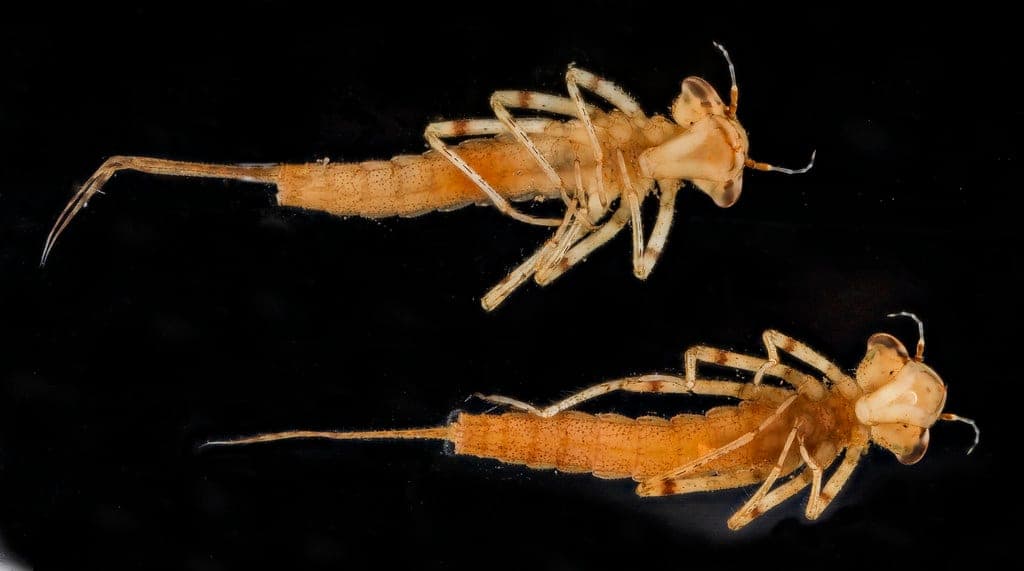
Trout take the large majority of their food underwater, as nymphs drifting in the current. That means a box of nymphs will out-fish a box of dry flies on most days on most rivers, and the Essential Trout Nymph Assortment is Orvis's pre-packed version of that box.
The trade is not price, it is engagement. Fishing a dry fly means watching a fish rise and eat something you can see, and it is the reason a lot of people fly fish at all. Nymphing means watching an indicator and setting the hook on a hesitation.
Our dry-dropper rig guide is the way to have both: a visible dry fly on the surface with a nymph hanging below it. If you buy one assortment, buy the mixed Essential Trout Fly Selection. If you buy two, these are the second.
What we like
- Trout do most of their feeding below the surface, so a nymph-weighted box out-fishes a dry-weighted one most days
- Narrower selection is easier to learn than a mixed box
What you give up
- No dry flies, so you cannot fish a rising fish without buying more
- Nymphing is slightly harder to learn than fishing a dry you can see
| Criterion | Score / 10 |
|---|---|
| Pattern choice | 8 |
| Hook quality | 9 |
| Beginner value | 8 |
| Local relevance | 5 |
| Value | 8 |
| Overall | 7.8 |
The three kinds, and what the codes mean
| Code | Type | What it does | Beginner? |
|---|---|---|---|
| F | Floating | Whole line floats. Fishes dries, nymphs, small streamers | Yes — buy this |
| F/S | Sink tip | Floating body, sinking front section of 5-15 ft | Later, for streamers |
| S | Full sinking | Whole line sinks at a stated rate | Later, for still water |
| I | Intermediate | Sinks very slowly, just under the surface | Later, for lakes |
Sinking lines are rated by sink rate — inches per second — and by "type" numbers. None of that is worth learning yet. What fly line do I need covers the full label.
Why a floating line fishes deep too
This is the part that surprises people. Almost all nymph fishing in rivers — which is where trout do most of their feeding — is done with a floating line. The depth comes from somewhere else:
- The fly's weight. A beadhead nymph sinks on its own. A tungsten bead sinks faster.
- Leader length. A longer leader lets the fly get deeper before the line's drag pulls it up.
- Added weight. Small split shot or a tungsten putty above the fly.
- Slack. A drift with slack in it lets the fly sink; a tight line holds it up.
The advantage of doing it this way is enormous: you keep the ability to see and control your line on the surface, strike instantly, and pick up and recast easily. A sinking line gives all of that up. Dry-dropper rig explained is the clearest example of fishing two depths at once on a floating line.
When a sinking line is genuinely the right tool
- Still water from a boat or bank. In a lake there is no current to drift a nymph, so you cast out, let the line sink, and retrieve. An intermediate or full sinking line is the correct tool here and a floating line genuinely struggles.
- Streamer fishing in deep, fast water. A sink tip gets a big fly down and keeps it there through the swing, which a floating line cannot.
- Rivers deeper than about six feet where you need the fly on the bottom and holding.
- Sea-run fish and big western rivers in high water.
If your fishing is mostly lakes, you will want an intermediate line sooner rather than later — but still buy the floating line first, because it is what you will learn to cast on.
What we would buy
One weight-forward floating line matched to your rod. Then a packet of beadhead nymphs and a spool of 4X tippet, which together give you more depth control than a sinking line would and cost a fraction as much.
Best fly lines for beginners has the picks. Best nymphs for trout is where the depth actually comes from, and weight-forward versus double taper covers the other half of the line decision.
Questions people actually ask
What fly line to use as a beginner — floating or sinking?
Floating, and only floating. A weight-forward floating line fishes dry flies on the surface, nymphs below an indicator, and small streamers, which covers essentially all beginner trout fishing. Depth comes from weighted flies and a longer leader rather than from the line.
Can you fish nymphs on a floating line?
Yes — almost all river nymph fishing is done on a floating line. The fly sinks because it is weighted, helped by a longer leader and a drift with some slack in it. Keeping the line on the surface means you can see it, strike instantly and pick up to recast easily, all of which a sinking line makes harder.
When do you need a sinking fly line?
In still water, where there is no current to drift a nymph and you need to cast out, let the line sink and retrieve; for streamer fishing in deep fast water, where a sink tip gets a big fly down and keeps it there; and in rivers deeper than about six feet where the fly has to hold on the bottom.
What is a sink tip fly line?
A line with a floating body and a sinking front section, usually 5 to 15 feet long, marked F/S. It gets a fly down while leaving most of the line on the surface where you can manage it. It is primarily a streamer tool and not something a beginner needs in a first season.
Will a floating line sink if it gets dirty?
Yes, and this catches people out. A line that has accumulated dirt, algae, sunscreen and fine grit becomes denser and begins to sink when it should float — and the usual conclusion is that the line has failed. Wiping the first thirty feet with a damp cloth every few trips fixes it.
Read next

Best Beginner Line
Best Fly Lines for Beginners
The line is what you cast, so it is the first upgrade worth making. Two picks, and the quarter-size-heavy trick.
Fly Line, Leader & Tippet
What Fly Line Do I Need?
WF5F decoded, plus which taper, density and weight to buy — and what to ignore entirely.

Fly Line, Leader & Tippet
Weight Forward vs Double Taper Fly Line
Weight-forward is the beginner answer. Double taper's two real advantages, and why they do not apply yet.
Best Nymphs
Best Nymphs for Trout
Four nymph patterns that catch trout almost anywhere, plus the nymph-only assortments worth owning.
Flies & Fly Tying
The Dry-Dropper Rig, Explained
How to set up a dry-dropper rig: spacing, flies, knots and the mistakes that cause tangles.