Waders & Boots
Do I Need a Wading Jacket?
Probably not yet. You need something waterproof that you will actually carry, which is a different purchase from a proper wading jacket.
No, not in your first season — in most cases what you need is a cheap packable waterproof shell that lives in the bottom of your pack and weighs nothing. A dedicated wading jacket becomes worth the money when you start choosing to fish in bad weather rather than getting caught out in it, which for most people is year two or three.
That is the honest answer, and it is unusual advice on a page that also recommends three jackets. The reason is simple arithmetic: outerwear is the category where new fly anglers most often spend early money that should have gone to a fly line, wading boots or enough flies to stop running out of the one that is working.
The short list
| # | Pick | Best for | Score | Price |
|---|---|---|---|---|
| 1 | Frogg Toggs Java Toadz 2.5 Jacket2.5-ply · packableBest Value | The packable shell that answers the question for most first seasons | 7.0 | Check price on Amazon |
| 2 | Orvis Clearwater Wading Jacket3-layer nylon · 20K/15KBest Overall | The first proper wading jacket worth buying | 8.4 | Check price on Amazon |
| 3 | Simms Freestone Wading Jacket70D Toray 3-layerBest Upgrade Pick | For people who go out in weather deliberately | 8.5 | Check price on Amazon |

1. Best Value
Frogg Toggs Java Toadz 2.5 Jacket
Not a wading jacket and does not pretend to be — the correct purchase for someone who gets rained on three times a year and does not want to spend wading-jacket money about it.
| Spec | Value |
|---|---|
| Fabric | 2.5-ply ultralight waterproof breathable laminate |
| Seams | Fully taped and sealed |
| Packability | Packs down small enough to live in a vest pocket |
| Front closure | Full-length zipper |
| Hood | Attached |
| Fits offered | Men's and women's |
| Not a wading jacket | No fly-box chest pockets, no rod holder, no rear D-ring |
Most beginners do not need a wading jacket. They need something waterproof in the bottom of the bag for the forty minutes of rain that was not in the forecast, and they need it to weigh nothing, because a jacket you leave in the car has never kept anyone dry. That is exactly what a 2.5-ply packable shell is for.
The 2.5-ply construction means a face fabric and a membrane with a printed protective layer instead of a full third fabric layer. It is lighter and cheaper; it is also less durable and clammier against bare skin. For an hour of rain, neither matters. For eight hours in a drizzle, both do.
Be clear about what this is not. There are no fly-box chest pockets, no rod holder, no rear net D-ring, and the cut is full length rather than wading length. If you are standing in water, the hem is in the water. Treat it as a shell you own in addition to proper gear, not as a cheap substitute for it.
What we like
- Light and small enough that you actually carry it, which is the only property that matters in a shell you need unexpectedly
- Fully taped seams rather than the untaped seams on most emergency ponchos
- Cheap enough to own alongside a proper wading jacket rather than instead of one
What you give up
- 2.5-ply shells are less durable than three-layer ones and wear out at the pack straps
- Full-length cut, not wading length, so the hem will wick if you wade deep in it
| Criterion | Score / 10 |
|---|---|
| Weather protection | 6 |
| Breathability | 6 |
| Pockets | 3 |
| Casting freedom | 7 |
| Value | 9 |
| Overall | 7.0 |
2. Best Overall
Orvis Clearwater Wading Jacket
The jacket we would point a first buyer at: proper wading-jacket geometry and sealing at the price point where most people are still deciding whether they need one.
| Spec | Value |
|---|---|
| Fabric | Three-layer nylon shell, polyurethane membrane, nylon tricot liner |
| Ratings | 20K waterproof / 15K breathable (Orvis) |
| Seams | Fully taped |
| Front closure | YKK AquaGuard water-resistant zipper |
| Pockets | Two large front storage pockets, two handwarmer pockets |
| Hood | Three-way adjustable storm hood with laminated brim |
| Cuffs | Integrated neoprene |
| Other | Rear yoke D-ring, adjustable hem, DWR finish |
| Fits offered | Men's and women's, sold separately |
A wading jacket is not a rain coat with a fly-shop logo. It is cut short so the hem clears the water when you are thigh-deep, the pockets sit high so they stay dry, and the cuffs seal so that a raised casting arm does not funnel water down your sleeve. The Clearwater does all three, which is why it is the obvious default rather than an interesting one.
The construction is a three-layer nylon shell over a polyurethane membrane with a nylon tricot liner, fully taped, rated by Orvis at 20K waterproof and 15K breathable. Those numbers are lab ratings and they are not a promise about your afternoon, but 20K is comfortably into genuine-storm territory rather than shower-resistant territory.
What you give up against the top-end jackets is pit zips and the fancier membranes. In a cold rain you will not notice. On a muggy 70-degree drizzle you will, because a three-layer shell with no vents gets humid and there is nothing to open. That is the honest limit of this jacket.
What we like
- Wading-length cut, so the hem sits above the water rather than wicking it
- Neoprene cuffs are the detail cheap jackets omit, and the one that keeps your forearms dry
- Front storage pockets are sized for fly boxes, not phones
- Rear D-ring means a net hangs where you can reach it instead of off a pack strap
What you give up
- Costs more than the waders a lot of beginners are wearing under it
- No pit zips, so a warm drizzle gets humid inside
| Criterion | Score / 10 |
|---|---|
| Weather protection | 9 |
| Breathability | 7 |
| Pockets | 8 |
| Casting freedom | 8 |
| Value | 8 |
| Overall | 8.4 |
3. Best Upgrade Pick
Simms Freestone Wading Jacket
The step up that is actually about movement rather than waterproofing: the articulated cut and one-handed hood are what the extra money buys.
| Spec | Value |
|---|---|
| Fabric | Simms 70D Toray three-layer waterproof breathable nylon with DWR |
| Seams | Fully taped |
| Front closure | YKK water-resistant zipper with storm flap |
| Pockets | Waist-high zippered handwarmer pockets with micro-brushed tricot liner and drain holes |
| Hood | Single-point adjustable storm hood, high collar, bonded brim |
| Cuffs | Hook-and-loop adjustable |
| Cut | Articulated sleeves, motion-enhancing athletic cut |
| Fits offered | Men's and women's |
Everything above a certain price in rain gear is waterproof. What separates jackets is how they behave while you are casting — whether the shoulder binds, whether the hood turns with your head, whether you can work a zip without looking down. The Freestone is built around those questions, and the articulated sleeve construction is the single feature most worth the upgrade.
The shell is Simms's own 70D Toray three-layer laminate with a DWR finish and taped seams. Simms rates it as waterproof and breathable without publishing a hydrostatic head number on every listing, and we are not going to invent one — the independent gear write-ups that do quote a figure put it at 20,000 mm, which we note as a secondhand number rather than a manufacturer claim.
The pocket layout is the one thing to be clear-eyed about. These are waist-high zippered handwarmers with tricot lining and drain holes, not big chest-level fly-box pockets. If you are used to carrying boxes in your jacket, you will want a chest pack with it — our chest, sling and hip pack comparison covers that pairing.
What we like
- Articulated sleeves genuinely change how a jacket feels on the fortieth cast of a cold morning
- Drain holes in the handwarmer pockets, because they will get water in them
- A single-point hood adjusts one-handed, which matters when the other hand holds a rod
- Simms repairs and services its own outerwear
What you give up
- Roughly a third more money than the Clearwater for a difference most beginners will not feel in year one
- Handwarmer pockets rather than big front fly-box pockets — gear lives on your pack, not the jacket
| Criterion | Score / 10 |
|---|---|
| Weather protection | 9 |
| Breathability | 8 |
| Pockets | 7 |
| Casting freedom | 10 |
| Value | 7 |
| Overall | 8.5 |
The decision in one table
| Your situation | Need one? | Buy instead |
|---|---|---|
| First season, summer trout | No | A packable shell that fits in a pack pocket |
| Bank fishing in light rain | No | Any waterproof coat you already own |
| Deep wading in cold rain | Yes | A short-hem wading jacket with sealed cuffs |
| Out 40+ days a year in all weather | Yes | A jacket with articulated sleeves |
| Winter steelhead or cold tailwaters | Yes | A wading jacket plus proper layers |
| You already own a hiking shell | Not yet | Fish it for a season and see what annoys you |
The pattern: a wading jacket earns its money when you are deep in the water, for a long time, in weather you chose. If any of those three is missing, a shell is enough.
What a wading jacket does that a rain coat cannot
Four things, and they are all geometry rather than fabric. Any decent rain coat is waterproof; what a hiking shell gets wrong is where the water goes when you are standing in a river with your arms up.
- The hem stops at the waist. Roughly where a wading belt sits, so it does not hang in the river and wick water upward into everything you are wearing.
- The cuffs seal. Neoprene or a properly adjustable closure, because every overhead cast raises your forearm and funnels water down the sleeve to your elbow.
- The pockets sit at chest level. Above the waterline when you wade deep, and sized for fly boxes.
- There is a D-ring for a net. A rear yoke ring is standard on wading jackets and absent from everything else.
Test what you already own: stand in front of a mirror and make a casting stroke with your arm fully extended overhead. Watch where the sleeve opening points and where the hem sits. If the cuff gapes and the hem is below your wading belt, that jacket will get you wet in a river regardless of what the hang tag claims.
What to buy first instead
If this page has talked you out of the purchase, here is the order we would spend the money in. Each of these affects more days on the water than a jacket does in a first season.
| Spend on | Why it beats a jacket | Our page |
|---|---|---|
| A packable waterproof shell | Solves most of the rain you will actually meet, and you will carry it | This page's value pick |
| Wading boots | Used every single trip, and decides whether you stay upright | Best wading boots |
| A better fly line | The line is what you cast; it changes more than the rod does | Best fly lines for beginners |
| More flies | Running out of the fly that is working ends the day | Best trout flies for beginners |
| A brimmed hat | A hood with no brim under it funnels rain onto your glasses | First day on the water checklist |
The brimmed hat is the one people laugh at and then buy. A hood alone channels water straight down your face, and you cannot read water you cannot see.
If the answer is yes, what to check
- Taped seams before waterproof ratings. A 20,000 mm fabric with raw seams leaks at the seams. Taping is the first spec to confirm.
- Cuff type. Neoprene seals best. Hook-and-loop adjusts around a watch. Elastic is the budget answer and the weakest.
- Hem length. It should finish at or just above where your wading belt sits, not below it.
- Pocket height and size. Chest level, and big enough for the fly box you actually carry.
- Breathability over waterproofing. Most rain fishing is warm rain. A sealed jacket with no venting leaves you just as wet from the inside.
Our full comparison of the current options, with the published fabric specs side by side, is best fly fishing jackets. What goes under it is the same question as what to wear under waders, with one rule that matters more here: never cotton, not even the hoodie, because a damp cotton layer inside a waterproof shell is a cold compress you cannot take off.
Why your jacket will seem to leak, and how to stop it
Worth knowing before you buy, because it decides whether a cheap jacket lasts two seasons or six. Almost every waterproof-breathable jacket eventually appears to leak, and usually it has not — what failed is the DWR, the water-repellent finish on the outer face fabric. When it dies, the face soaks up water, the membrane can no longer push vapour outward, and you get wet from your own sweat.
- Wash it rather than avoiding washing it. Sunscreen and body oils kill DWR faster than use. Technical wash, no detergent, no fabric softener.
- Tumble dry warm. Heat reactivates DWR and revives most jackets that have "started leaking".
- Re-proof when heat stops working. A wash-in or spray-on DWR treatment restores beading for another season.
- Hang it dry rather than packing it damp. Mildew on a liner is permanent.
Do that and the cheap packable shell on this page lasts long enough that the decision to upgrade is a want rather than a replacement. Which is the right way round.
Questions people actually ask
Do I really need a wading jacket to fly fish?
Not in your first season, for most people. What you need is something waterproof you will actually carry, and a cheap packable shell in the bottom of a pack covers most of the rain a summer angler meets. A dedicated wading jacket is the purchase you make once you start fishing in bad weather deliberately.
What is the difference between a wading jacket and a rain jacket?
Geometry, not waterproofing. A wading jacket's hem stops at the waist so it does not hang in the river, its cuffs seal against water running down a raised casting arm, its pockets sit above the waterline, and it has a rear D-ring for a net. A hiking shell is just as waterproof and still gets you wet.
Can I use my hiking rain jacket for fly fishing?
For a season, yes, and plenty of people do. Expect two specific problems: water running down your sleeve to the elbow on every overhead cast, and a hem that wicks river water upward once you wade past your thighs. If you fish from the bank in light rain, neither will bother you.
Is a packable shell good enough for fly fishing?
For warm-weather fishing, usually yes — and its real advantage is that it weighs little enough that you take it every time, which a heavy jacket left in the car does not. It will not seal at the cuffs and it hangs below a wading belt, so it is a compromise rather than an equivalent.
What should I wear under a wading jacket?
A synthetic or merino base layer and a fleece or synthetic mid-layer. A shell has no insulation value of its own, so the jacket does not change what you wear underneath. Never cotton, including the hoodie, because a damp cotton layer trapped inside a waterproof shell stays cold all day.
Should I size up a wading jacket for layers?
By one layer's worth, not two. You want room for a fleece, not for a down puffy. A jacket bought too large binds at the shoulder when you cast and flaps in wind, and shoulder bind is cumulative over a few hundred casts in a way a slightly snug fit is not.
Why does my waterproof jacket leak when it is not torn?
Nine times out of ten the DWR finish has worn off rather than the jacket failing. Without it the outer face soaks up water, the membrane cannot pass vapour outward, and you get damp from your own sweat. Wash it with a technical wash and tumble dry warm; re-proof when heat stops working.
Where these figures come from
Read next
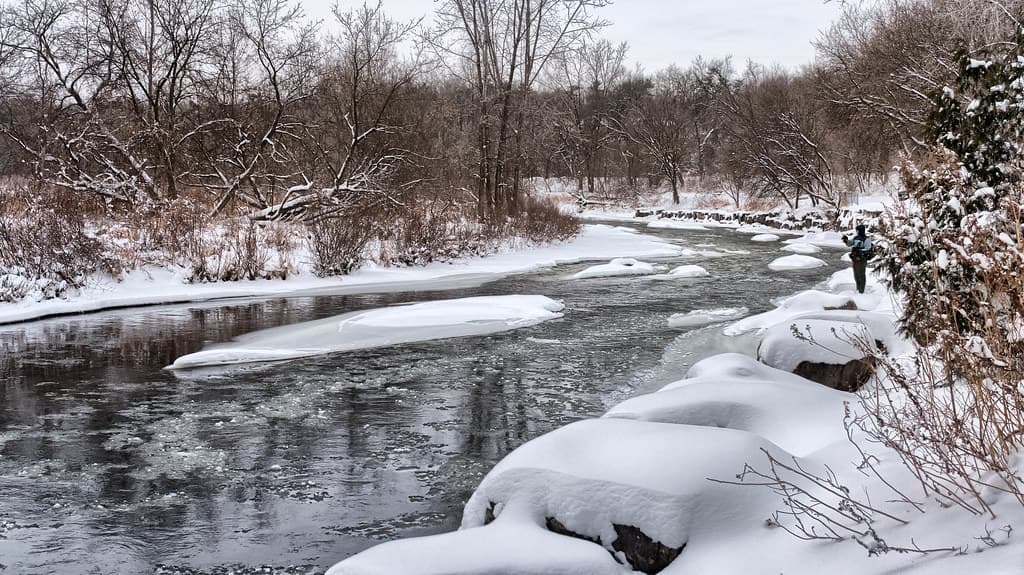
Wading jackets
Best Fly Fishing Jackets
Five wading jackets and rain shells that are currently sold, from a packable budget emergency layer to the premium cut you can cast in all day.
Waders & Boots
What to Wear Under Waders
Layering under waders by season and water temperature, why cotton is the one real mistake, and what to do about sock thickness and boot fit.
Waders & Boots
Waders by Water Temperature
A water-temperature table for waders and layers, with a separate column for standing still.
Start Here
Fly Fishing Gear Checklist for Beginners
Six items to buy before your first trip, three you can postpone, and the one non-gear item you cannot fish without.