Waders & Boots
What to Wear Under Waders
Synthetic or wool, never cotton, and layer for the water rather than the air. The socks matter more than the top.
Wear synthetic or merino wool base layers under waders, and never cotton. That is the whole rule and it accounts for nearly every comfort problem people have in waders. Cotton absorbs sweat, holds it against your skin and then draws heat out of you — which is unpleasant in July and genuinely dangerous in February. In summer that means light synthetic leggings or quick-dry shorts; in cold water it means a merino base layer plus a fleece or synthetic mid-layer pant.
The part people get wrong: layer for the water temperature, not the air temperature. You are standing thigh-deep in a river that may be 20 degrees colder than the afternoon, and water pulls heat out of you roughly 25 times faster than air does. A 70-degree day on 45-degree snowmelt is a cold-water day. Our waders by water temperature page is built around exactly that distinction.
The short list
| # | Pick | Best for | Score | Price |
|---|---|---|---|---|
| 1 | Simms Tributary Stockingfoot Waders3-layer upper · 4-layer lowerBest Overall | Breathable enough that layering under it actually works | 8.5 | Check price on Amazon |
| 2 | Orvis Clearwater Waders4-layer breathable nylonBest for Cold Water | Four layers throughout, with room for a fleece pant | 8.1 | Check price on Amazon |
| 3 | TIDEWE Bootfoot Chest Waders2-ply nylon/PVC · cleated bootfootBest for Cold Water | Attached boots, which solve the sock-compression problem | 6.9 | Check price on Amazon |
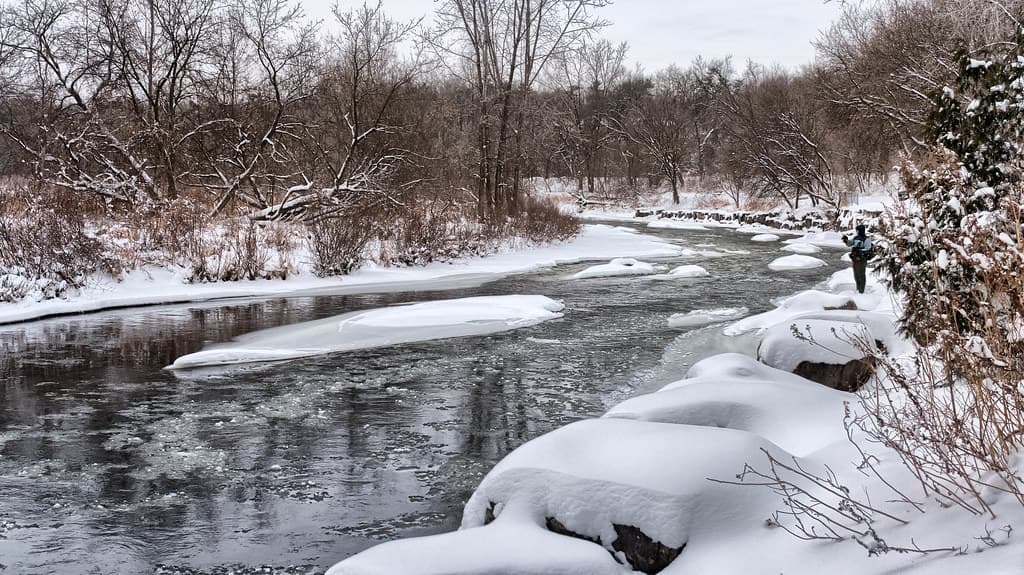
1. Best Overall
Simms Tributary Stockingfoot Waders
The wader we would buy first: breathable, four-layer where it counts, from the company most likely to still fix it in five years.
| Spec | Value |
|---|---|
| Fabric | Breathable waterproof polyester |
| Upper | 3-layer |
| Lower | 4-layer |
| Foot | Stockingfoot (wading boots sold separately) |
Waders are not waterproof trousers — they are a wearable barrier that has to survive being knelt on, dragged through brambles and pressed against gravel. That is why the Tributary uses a three-layer breathable polyester above the waist and a four-layer version below it. Nearly every leak a wader ever develops is below the waist.
Breathable is the right choice for almost everyone, because the alternative, neoprene, traps your own moisture and cooks you above about 60 degrees Fahrenheit. The trade is that breathable fabric insulates almost nothing: in cold water you wear fleece or merino underneath and the wader keeps it dry.
These are stockingfoot waders, meaning the leg ends in a neoprene sock and you wear separate wading boots over it. That is the right configuration for fly fishing — it gives you a real boot with ankle support and a sole you can choose — but it does mean the purchase is two purchases.
What we like
- Four-layer fabric below the waist is where waders actually fail, and this is where Simms spends the money
- Breathable, so you are not swimming in your own sweat on a warm day
- Simms repairs waders, and a repairable wader is a cheaper wader over five years
What you give up
- Stockingfoot, so you need wading boots as well — budget for both
- Breathable fabric gives you almost no insulation on its own
| Criterion | Score / 10 |
|---|---|
| Durability | 9 |
| Breathability | 8 |
| Comfort | 8 |
| Repairability | 9 |
| Value | 8 |
| Overall | 8.5 |
2. Best for Cold Water
Orvis Clearwater Waders
Four-layer fabric top to bottom with a real women's fit, at a small premium over the Tributary.
| Spec | Value |
|---|---|
| Fabric | Four-layer waterproof breathable nylon |
| Foot | Stockingfoot; a bootfoot version is also sold |
| Fits | Men's and women's |
The Clearwater's differentiator is simple: Orvis uses a four-layer waterproof breathable nylon for the whole garment rather than three layers above the waist. More layers means more abrasion resistance and more weight, and whether that is the right trade depends mostly on what you wade through.
The other thing worth flagging is fit. Orvis builds the Clearwater in a proper women's pattern, which is not universal in this price range and makes a large practical difference — a wader that is too long in the body is a wader you trip in.
There is also a bootfoot Clearwater, with the boot bonded on. That costs you sole choice and ankle support, and it saves you a second purchase. For a first wader on easy water it is a legitimate choice.
What we like
- Four-layer nylon throughout rather than only below the waist
- A genuine women's fit, not a men's wader in a smaller size
- A bootfoot version exists if you would rather buy one thing than two
What you give up
- Four layers everywhere is slightly warmer and slightly less breathable on a hot day
- Priced above the Tributary at most retailers we checked
| Criterion | Score / 10 |
|---|---|
| Durability | 9 |
| Breathability | 7 |
| Comfort | 8 |
| Repairability | 8 |
| Value | 7 |
| Overall | 8.1 |
3. Best for Cold Water
TIDEWE Bootfoot Chest Waders
The cold-weather, one-purchase answer: a bootfoot PVC-backed wader that is easy to get into and not pretending to breathe.
| Spec | Value |
|---|---|
| Fabric | 2-ply nylon with PVC backing |
| Weight | Around 35% lighter than traditional rubber |
| Seams | Taped |
| Foot | Cleated bootfoot (boot attached) |
| Suspenders | Adjustable H-back |
Bootfoot waders have the boot permanently attached. The upside is real: one purchase, nothing to lace, and you can step in and out in seconds. On a freezing morning with numb fingers, that is a bigger deal than it sounds.
TIDEWE's version uses a 2-ply nylon with a PVC backing, roughly 35% lighter than traditional rubber waders, with taped seams and adjustable H-back suspenders. For sitting in cold water on a winter day it is a sensible piece of kit.
Two honest limits. It does not breathe, so warm-weather use is miserable. And the cleated rubber sole is the weakest traction option there is on the algae-slick bedrock that a lot of trout rivers are made of — read our felt versus rubber soles comparison before you decide this is the right sole for your water.
What we like
- Bootfoot, so this is the whole purchase — no separate wading boots to buy
- Easier to get on and off than stockingfoot plus laced boots, which matters with cold hands
- Taped seams and PVC backing are honest construction at this price
What you give up
- Not breathable, so you will sweat in anything above cool weather
- Boot sizing is fixed to the wader size, so a bad fit cannot be fixed by swapping boots
- Cleated rubber sole is the least grippy option on slick rock
| Criterion | Score / 10 |
|---|---|
| Durability | 7 |
| Breathability | 3 |
| Comfort | 7 |
| Repairability | 4 |
| Value | 9 |
| Overall | 6.9 |
What to wear, by water temperature
Water temperature, not the forecast. A cheap stream thermometer settles it, and most anglers end up owning one for reading hatches anyway.
| Water temp | Legs | Socks | Upper body |
|---|---|---|---|
| 65°F and up | Quick-dry shorts, or nothing much | Light synthetic or thin merino | Whatever the air wants. Waders are the windproof layer |
| 55-65°F | Light synthetic leggings | Midweight merino | Base layer plus a light fleece |
| 45-55°F | Merino base layer plus light fleece pant | Midweight to heavy merino | Base layer, fleece, windproof shell over the waders |
| 35-45°F | Merino base plus heavy fleece or synthetic pant | Heavy merino, one pair only | Base, heavy fleece, insulated shell |
| Under 35°F | As above, and consider not going | Heavy merino, plus boot size allowance | Full winter layering. Short sessions |
Two notes on reading that table. The upper body is easier than people expect, because waders are themselves a windproof shell to the chest — the usual mistake is overdressing up top and then sweating into the base layer. And the bottom row is partly a safety row: wading in near-freezing water is a cold-shock risk if you go in, and the honest advice is to fish from the bank instead.
Why cotton is the one real mistake
Jeans under waders is the classic beginner error and it is worth being specific about why, because it is not fussiness:
- Cotton holds water and will not release it. Wet cotton stays wet for hours, and it conducts heat away from you the entire time.
- It blocks the wader from breathing. A breathable wader moves vapor out through the membrane. Saturated cotton stops that at the first layer, so sweat condenses inside and you decide the wader leaks.
- Jeans add bulk in the worst places. Seams at the knee and crotch rub against wader seams, which is where waders fail.
- It does not dry in the car. A synthetic base layer is wearable again after an hour. Wet jeans are a whole second problem.
The substitutes are cheap and they are not fishing-specific: any synthetic or merino running, hiking or ski base layer works. There is no reason to buy branded fly fishing underlayers at fly fishing prices, and we are not going to pretend there is. The only garment where fishing-specific design genuinely helps is the wading sock, and it helps for a boot-fit reason rather than a warmth one.
Socks, and the boot-size problem
This is where most of the real comfort lives, and where the advice is counter-intuitive. Thicker socks do not make cold feet warmer if the boot is already tight. Compression kills circulation, and circulation is what keeps toes warm. A heavy sock crammed into a boot sized for a light one gives you colder feet than the light sock did.
- Decide your coldest-day sock first. Then buy boots to fit over your wader bootie plus that sock, which usually means one to one and a half sizes above street shoe size.
- Wear one pair, not two. Two pairs bunch, slip and compress. One correctly-weighted merino sock beats two thin ones every time.
- Use merino, not cotton, and not a thin synthetic liner by itself. Merino insulates damp, which is the relevant property inside a bootie.
- Always wear gravel guards. Grit that gets inside a bootie grinds the neoprene from the inside and ruins the wader long before the fabric fails.
- In really cold water, consider bootfoot. There are no laces to compress anything, which is the single most effective fix for cold feet.
Our wading boot sizing guide has the sizing arithmetic, and stockingfoot vs bootfoot covers the cold-water case for attached boots. If you have not bought boots yet, size them for winter and wear a thinner sock in summer — the reverse does not work. The layer that goes over all of this is a separate decision: best fly fishing jackets covers wading jackets and when a packable shell is the smarter buy.
Summer: the question nobody answers directly
Autocomplete is full of "what to wear under waders in summer", and the honest answer is: as little as is comfortable. In water above about 65°F, waders are being worn for abrasion, sun and ticks rather than warmth, and the enemy is overheating.
| Option | Works because | Watch out for |
|---|---|---|
| Quick-dry shorts | Minimum insulation, dries instantly if you wade deep | Seams rubbing on long walks in |
| Light synthetic leggings | No chafe, wicks, protects skin from the wader lining | Slightly warmer than shorts |
| Swim shorts | Already designed to be wet | Mesh liners can chafe when damp |
| Thin merino leggings | Wicks and does not stink after three sessions | More expensive than it needs to be |
| Cotton anything | It does not | Overheating, condensation, blaming the wader |
And the genuinely better summer answer, which the gear industry will not give you: on warm water, do not wear waders at all. Wet-wade in quick-dry shorts, merino socks and a pair of wading boots or old closed-toe trainers. It is cooler, lighter and more pleasant, and it is what most experienced anglers do in August. Do I need waders for fly fishing? makes that case in full, and best fly fishing waders is there for when the water turns cold again.
The layer that goes over the top is a separate purchase with its own argument: do I need a wading jacket covers whether a wading cut is worth the money yet, or whether a cheap packable shell does the job.
Questions people actually ask
What do you wear under waders?
Synthetic or merino wool base layers, scaled to the water temperature — quick-dry shorts or light leggings in warm water, a merino base plus a fleece pant in cold. Never cotton and never jeans: cotton holds sweat against your skin, blocks the wader from breathing, and pulls heat out of you.
Can you wear jeans under waders?
You can, and you will regret it. Denim is cotton, so it soaks up sweat and stays wet, which makes you cold and stops a breathable wader venting vapor. The thick seams at the knee and crotch also rub against the wader's own seams, which is exactly where waders eventually fail.
What to wear under waders in summer?
Quick-dry shorts or thin synthetic leggings, and a light merino sock. In water above about 65°F the wader is there for abrasion, sun and insects rather than warmth, so the goal is minimum insulation. Better still, skip the waders and wet-wade in shorts and wading boots.
What to wear under waders in winter?
A merino base layer plus a heavy fleece or synthetic mid-layer pant, one pair of heavy merino socks, and a proper insulated shell over the waders on top. Layer for the water temperature rather than the air, and keep sessions short — below about 35°F, fishing from the bank is the sensible call.
Should I wear two pairs of socks under waders?
No. Two pairs bunch and compress your foot inside the boot, and compression restricts circulation, which is what actually makes toes cold. One correctly-weighted merino sock in a boot sized to fit over your bootie and that sock is warmer than two thin pairs crammed in.
Do I need special underwear for waders?
No. Any synthetic or merino running, hiking or ski base layer does the job, and there is no performance reason to buy fishing-branded underlayers at fishing prices. The one garment where fishing-specific design genuinely helps is the wading sock, and that is about boot fit rather than warmth.
Where these figures come from
Read next
Waders & Boots
Waders by Water Temperature
A water-temperature table for waders and layers, with a separate column for standing still.

Waders & Boots
Do I Need Waders for Fly Fishing?
Above about 65 °F water, no — and this page is here to save you a few hundred dollars.
Waders & Boots
Wading Boot Sizing Guide
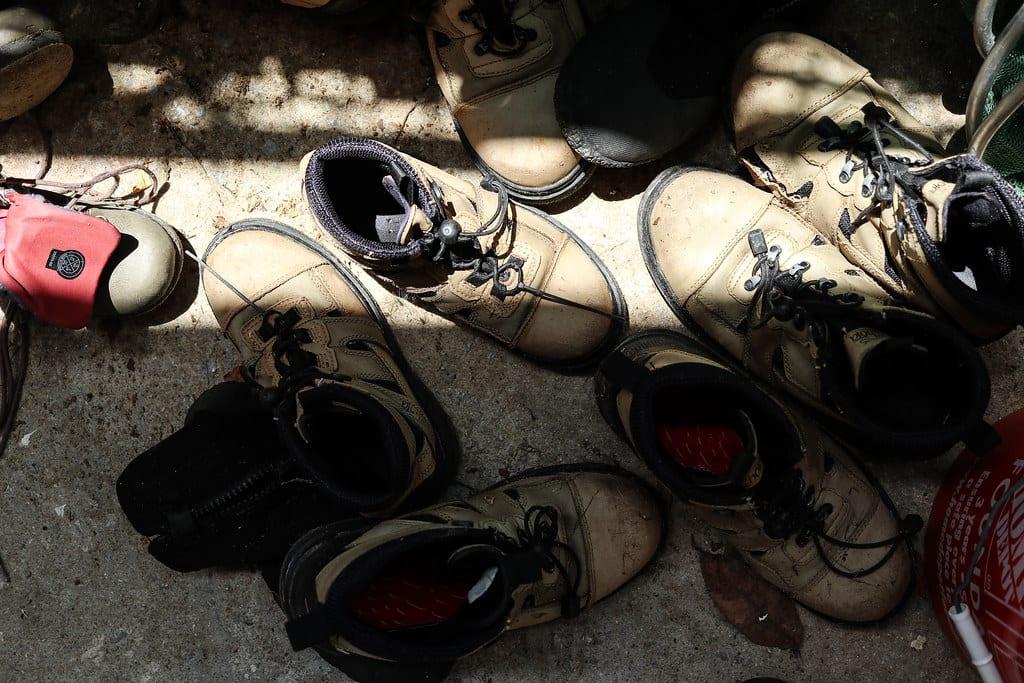
Why wading boots go up one to two sizes, how much exactly, and how to check the fit.
Waders & Boots
Simms Tributary vs Orvis Clearwater Waders
Layer counts, fits, pockets and repair paths on the two standard first waders, plus the cheaper option that makes sense for occasional use.
Wading jackets
Best Fly Fishing Jackets
Five wading jackets and rain shells that are currently sold, from a packable budget emergency layer to the premium cut you can cast in all day.