Flies & Fly Tying
Best Fly Tying Kits for Beginners
Ranked on the vise and the instruction, because those are what decide whether you keep tying. It will not save you money.
Do not start tying to save money. A beginner kit plus materials costs more than the flies you will lose in your first season, and your early flies will be worse than shop flies. That is the honest arithmetic and most roundups on this topic bury it.
Start tying because it is absorbing in its own right, because it lets you tie exactly what your water needs, and because catching a fish on something you made is genuinely different. If that is the reason, the pick is the Orvis Fly-Tying Kit — the instruction is what makes a kit work.
The short list
| # | Pick | Best for | Score | Price |
|---|---|---|---|---|
| 1 | Orvis Fly-Tying KitUp to 160 flies · 16 patterns taughtBest Overall | Learning to tie with real instruction included | 8.4 | Check price on Amazon |
| 2 | WETFLY Deluxe Fly Tying Vise & Tools Kit24-piece · Super AA viseBest Value | Natural materials rather than brittle synthetics | 7.8 | Check price on Amazon |
| 3 | Ninnifly Fly Tying Kit for Beginners100+ pieces · 60 hooksBest Starter Kit | QR-code video tutorials instead of a DVD | 7.2 | Check price on Amazon |
| 4 | Colorado Anglers Z797 Standard Fly Tying KitMaterials for 30-50 fliesBest Under $150 | The cheapest honest way to find out if you like tying | 6.4 | Check price on Amazon |
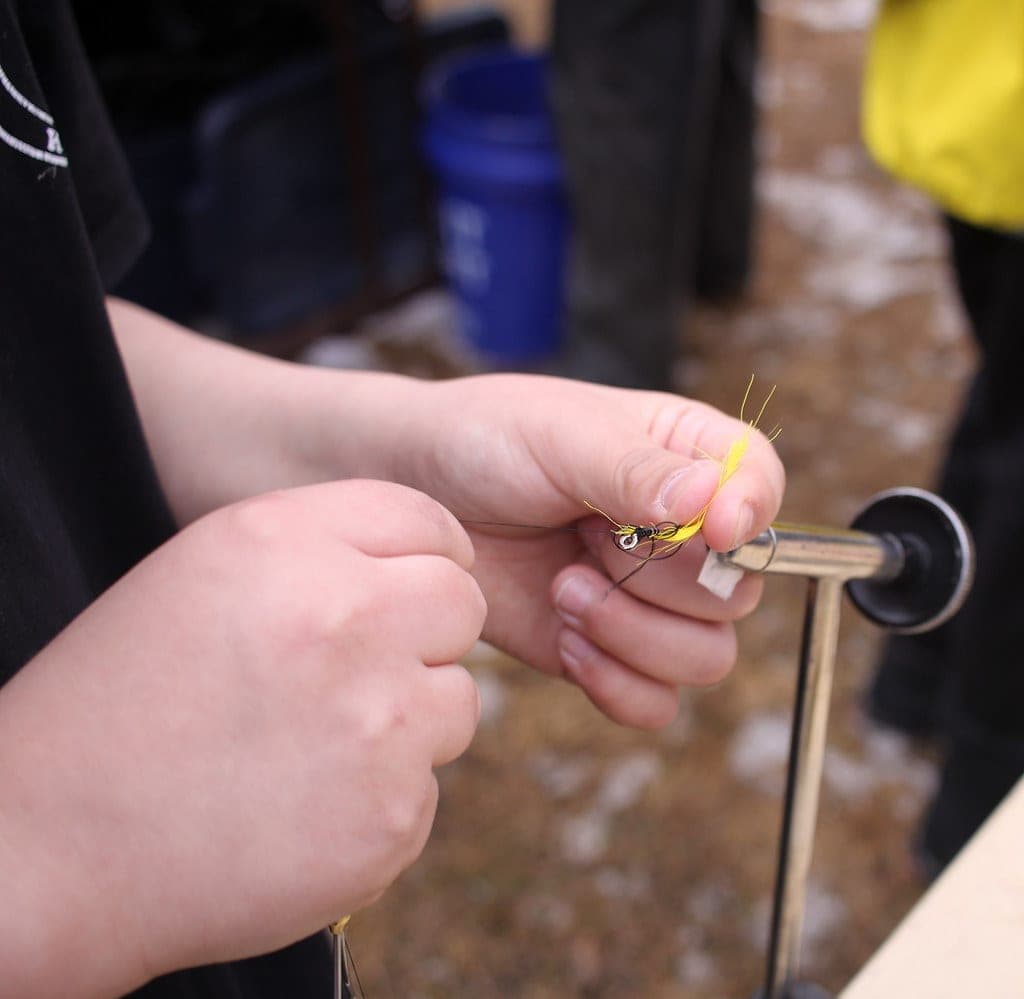
1. Best Overall
Orvis Fly-Tying Kit
The tying kit that teaches you to tie, rather than the one that sells you a box of feathers.
| Spec | Value |
|---|---|
| Materials for | Up to 160 flies |
| Instruction | Video covering 16 patterns, beginner to advanced |
Almost every beginner fly-tying kit fails the same way: it contains tools and materials and no idea what to do with them. The Orvis kit includes instruction covering 16 patterns from beginner to advanced, and materials for up to 160 flies.
That ratio is the thing to notice. Materials for 160 flies across 16 patterns means ten of each, and ten attempts is roughly how many it takes before a pattern starts looking like the picture. A kit with materials for 30 flies across 20 patterns teaches you to tie 20 bad flies.
The vise in any kit at this level is a starter vise, and if you stick with tying you will replace it. That is fine — the vise is the cheapest part of the hobby to upgrade later.
What we like
- The instruction is the product — tools without a curriculum is how tying kits end up in a cupboard
- Materials for up to 160 flies means you can tie the same pattern ten times, which is how you actually learn one
- Orvis materials are the ones the videos assume, so nothing is substituted
What you give up
- More expensive than the budget tool kits
- A kit's vise is always the first thing a committed tyer replaces
| Criterion | Score / 10 |
|---|---|
| Instruction | 10 |
| Tool quality | 7 |
| Material quality | 8 |
| Materials included | 9 |
| Value | 8 |
| Overall | 8.4 |
2. Best Value
WETFLY Deluxe Fly Tying Vise & Tools Kit
The best materials in a budget kit — natural hackle and marabou — with instruction stuck on a disc.
| Spec | Value |
|---|---|
| Pieces | 24 |
| Vise | Super AA with C-clamp |
| Instruction | DVD included |
| Materials | Natural hackle feathers, marabou, dubbing |
What separates a cheap tying kit from a usable one is usually the materials, not the tools. Dry, brittle synthetic hackle will not wrap without snapping, and a beginner cannot tell the difference between bad materials and their own bad technique. The WETFLY Deluxe kit ships with natural hackle feathers, real marabou and quality dubbing.
The kit is 24 pieces built around a Super AA vise with a C-clamp, which means it mounts firmly to a kitchen table rather than wobbling on a pedestal base.
The instruction is a DVD, which in 2026 is a real limitation. If you plan to learn from online tutorials anyway, that matters less. If you were counting on the included instruction, the Orvis kit's video is the better route.
What we like
- Natural hackle and marabou rather than the brittle synthetics that ship with most cheap kits — this is the difference between a fly that breathes and one that does not
- A C-clamp vise mounts solidly to a real table
- 24 pieces covers the tools you actually need rather than padding the count
What you give up
- DVD-based instruction assumes you own a DVD drive
- Material quantities are modest compared with the Orvis kit
| Criterion | Score / 10 |
|---|---|
| Instruction | 6 |
| Tool quality | 8 |
| Material quality | 9 |
| Materials included | 7 |
| Value | 9 |
| Overall | 7.8 |
3. Best Starter Kit
Ninnifly Fly Tying Kit for Beginners
The modern instruction format on a budget kit, with material quality we could not verify.
| Spec | Value |
|---|---|
| Pieces | 100+ |
| Hooks | 60 included |
| Instruction | QR-code video tutorials |
| Case | Travel case included |
The Ninnifly kit's one clear advantage is how it teaches: QR codes that open video tutorials, rather than a DVD. That is the right call, and for a self-taught beginner it is worth more than most of the component list.
It includes 100-plus pieces and 60 hooks in a travel case. Having hooks in the box matters — a kit without hooks is a kit you cannot use until a second order arrives.
We will be straight about the limit of what we know: published information on the quality of the feathers and dubbing is thin, and with tying materials the quality is the product. We have no basis for telling you it is good or that it is bad, so we are not going to. If material quality is your priority and the budget stretches, the WETFLY kit publishes what it uses.
What we like
- QR-code video tutorials are the right instruction format — you watch on the phone already on your desk
- 60 hooks included, so you are not buying hooks separately on day one
- Travel case means the kit packs away rather than colonizing a table
What you give up
- Published detail on material quality is thin, so we cannot tell you whether the hackle is usable
- A 100+ piece count includes a lot of small items of unclear value
| Criterion | Score / 10 |
|---|---|
| Instruction | 9 |
| Tool quality | 6 |
| Material quality | 5 |
| Materials included | 8 |
| Value | 8 |
| Overall | 7.2 |
4. Best Under $150
Colorado Anglers Z797 Standard Fly Tying Kit
The cheapest complete tool set for tying, and the right buy only if your instruction is coming from somewhere else.
| Spec | Value |
|---|---|
| Tools | Bobbin, scissors, whip finisher, bodkin, basic vise |
| Materials for | Roughly 30-50 flies |
The Z797 is the floor of the category: a bobbin, scissors, a whip finisher, a bodkin, a basic vise, and materials for somewhere around 30 to 50 flies. Those four tools plus a vise genuinely are the irreducible minimum — you cannot tie without a bobbin to hold tension or a whip finisher to end the fly.
It is the right purchase in one specific situation: someone is teaching you. A club night, a friend at a vise, a shop class. In that situation the instruction is already covered and you just need tools.
On your own it is a frustrating first kit, because there is nothing in the box telling you what to do and the material quantities do not allow the repetition that learning needs. Our first five flies to tie guide is written partly to fill that gap.
What we like
- The genuinely cheapest route into tying that still includes every tool you need
- The four tools included are the four you cannot tie without
- Low enough outlay that abandoning the hobby costs you very little
What you give up
- No structured instruction at all
- Materials for 30-50 flies is not enough repetition to learn a pattern properly
- The vise is basic even by kit standards
| Criterion | Score / 10 |
|---|---|
| Instruction | 2 |
| Tool quality | 6 |
| Material quality | 6 |
| Materials included | 5 |
| Value | 9 |
| Overall | 6.4 |
How we chose
We weighted vise quality first and instruction second, and we deliberately ignored piece count. A kit advertising 100+ pieces is usually counting individual hooks and beads; what decides whether you are still tying in three months is whether the vise holds a hook without slipping and whether anything taught you how to start.
Then material quality — natural hackle, marabou and dubbing are more forgiving than the brittle synthetics in the cheapest kits — and then whether the kit includes hooks in useful sizes. We have not tied with every kit here and do not claim to have. How We Choose.
What is actually in a tying kit
| Tool | What it does | Does cheap hurt? |
|---|---|---|
| Vise | Holds the hook. Everything else is downstream of this | Yes — most of all. A vise that slips makes tying impossible to learn |
| Bobbin | Holds and tensions the thread | Somewhat. A rough tube frays thread and it is maddening |
| Scissors | Cuts thread, hackle, synthetics | Yes. Blunt scissors chew rather than cut |
| Whip finisher | Ties off the thread at the head | Not much. You can finish by hand once taught |
| Bodkin | Picks out dubbing, applies cement | No. It is a needle in a handle |
| Hackle pliers | Grips a feather while you wind it | Mildly. Cheap ones cut the stem |
If you upgrade one thing out of a cheap kit, upgrade the vise. If you upgrade two, add the scissors.
Does tying save money? The real numbers
Break-even on a beginner kit runs to several hundred flies — which is more than most people lose in their first few seasons. Add materials you buy later because the kit did not include the color you need, and the honest answer is that tying is a hobby with its own cost, not a saving.
Where it genuinely pays: patterns nobody sells locally, variations tuned to your water, and flies you lose constantly in the same spot. Tying twelve of one pattern you fish every week is both cheap and satisfying.
What to tie first
Not a Parachute Adams. A parachute post is a fiddly technique and starting there is how people give up in an evening.
Start with a Woolly Bugger: it teaches thread control, winding hackle and tying in materials, it is forgiving of ugliness, and a rough one catches fish. Then a Hare's Ear nymph, then a Zebra Midge. The full progression is on the first five flies to tie, and fly tying tools explained covers each tool in detail.
Questions people actually ask
Is a fly tying kit worth it for a beginner?
As a hobby, yes. As a saving, no — break-even runs to several hundred flies and your first dozen will be worse than shop flies. Buy a kit because tying appeals to you, not to cut costs.
What should I look for in a beginner fly tying kit?
The vise above everything else — a vise that slips makes tying unlearnable. Then instruction, whether that is a video series or a booklet. Ignore piece counts; they are usually counting individual hooks and beads.
What is the easiest fly to tie first?
A Woolly Bugger. It teaches thread control, winding hackle and tying in materials, it tolerates untidy work, and a scruffy one still catches fish. Avoid parachute dry flies until you have a few dozen under your belt.
Do I need a vise, or can I hold the hook?
You need a vise. Both hands are occupied the entire time you are tying, and a hook held in fingers cannot be tensioned against. It is the one component where buying cheap genuinely prevents learning.
Where these figures come from
Read next
Flies & Fly Tying
The First Five Flies to Tie
Five flies in a deliberate order, each teaching one new tying skill. All five catch fish.

Flies & Fly Tying
Fly Tying Tools Explained
What every fly tying tool does, which ones matter, and where buying cheap genuinely hurts.

Best Trout Flies
Best Trout Flies for Beginners
Six patterns catch most trout. The assortments that cover them, and why a 100-fly kit is the wrong first buy.
Best Fly Box
Best Fly Boxes
What to look for in a fly box, and the slim foam box that holds a first trout selection properly.